
The selection of blueprints and production drafts displayed in this archival gallery are presented strictly for historical, educational, and reference purposes to celebrate the career of Jack McAdam. These original works remain the intellectual property of their respective studios, networks, and production companies. They are not available for duplication, digital download, or commercial reproduction.
Historical Archive
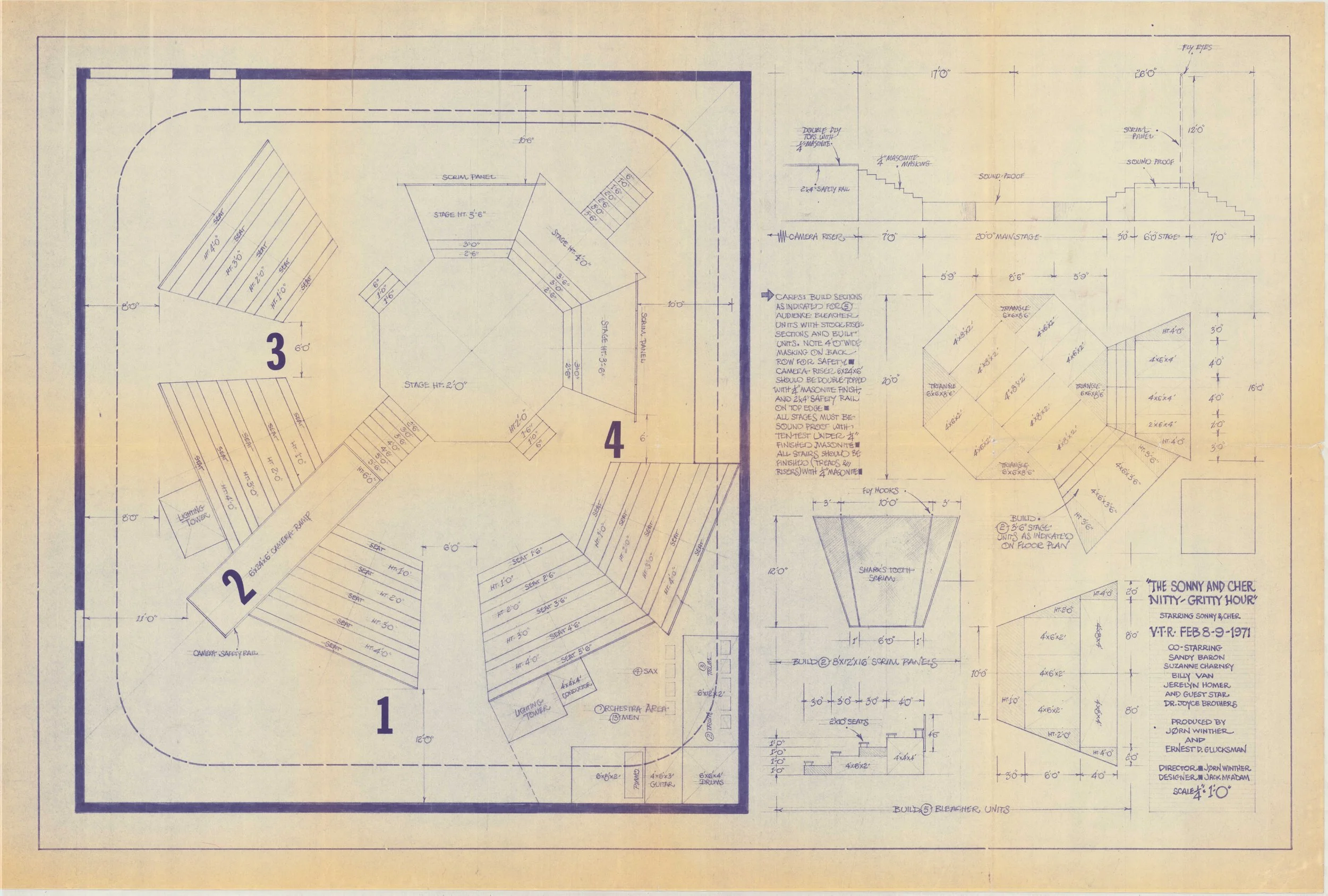
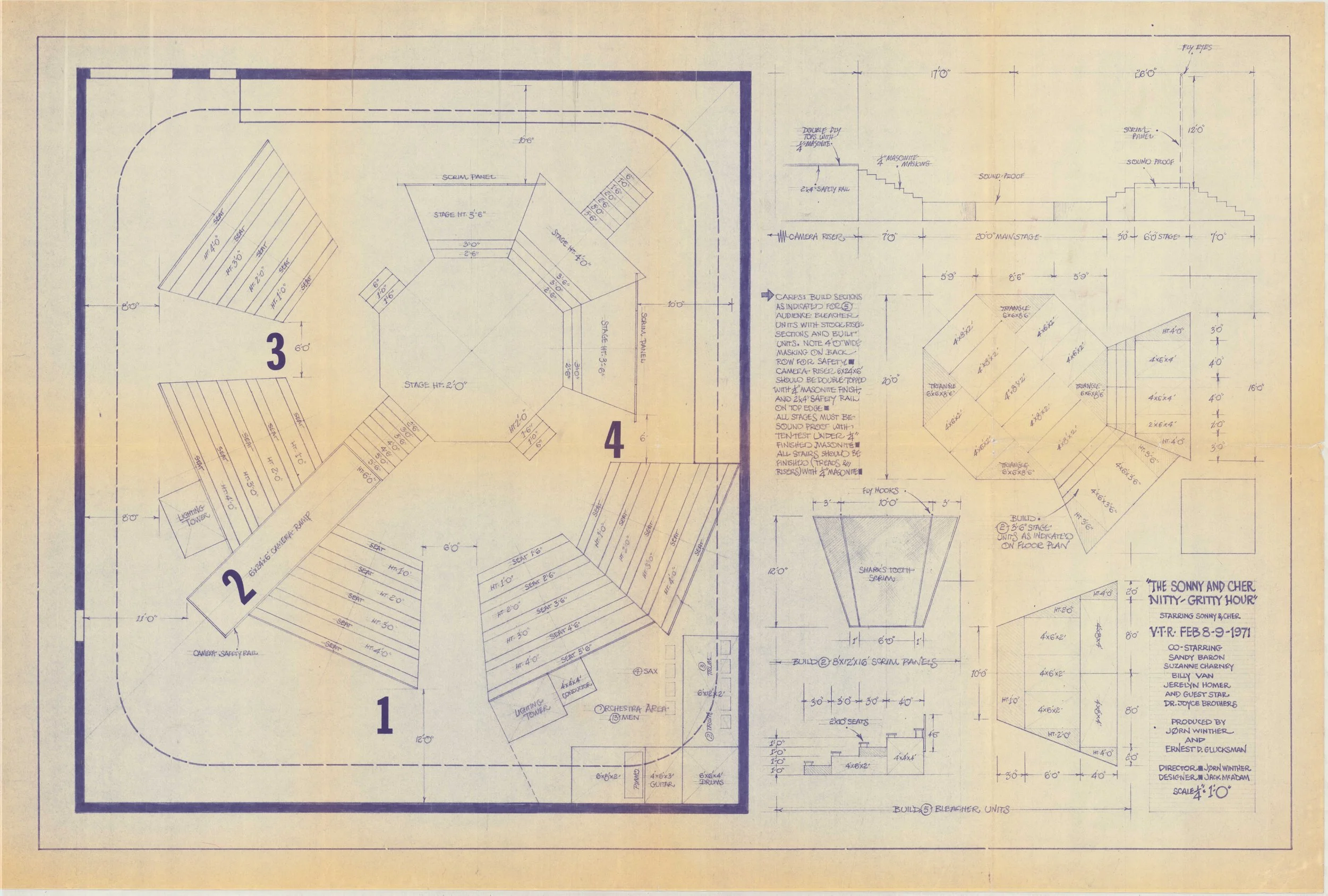
1971: The Sonny and Cher Nitty Gritty Hour
The Sonny and Cher Nitty Gritty Hour was a 1970 television comedy-music special filmed in Toronto. It served as the crucial on-screen prototype and testing ground for their deadpan bickering and musical style, directly leading to their massive hit network series, The Sonny & Cher Comedy Hour.
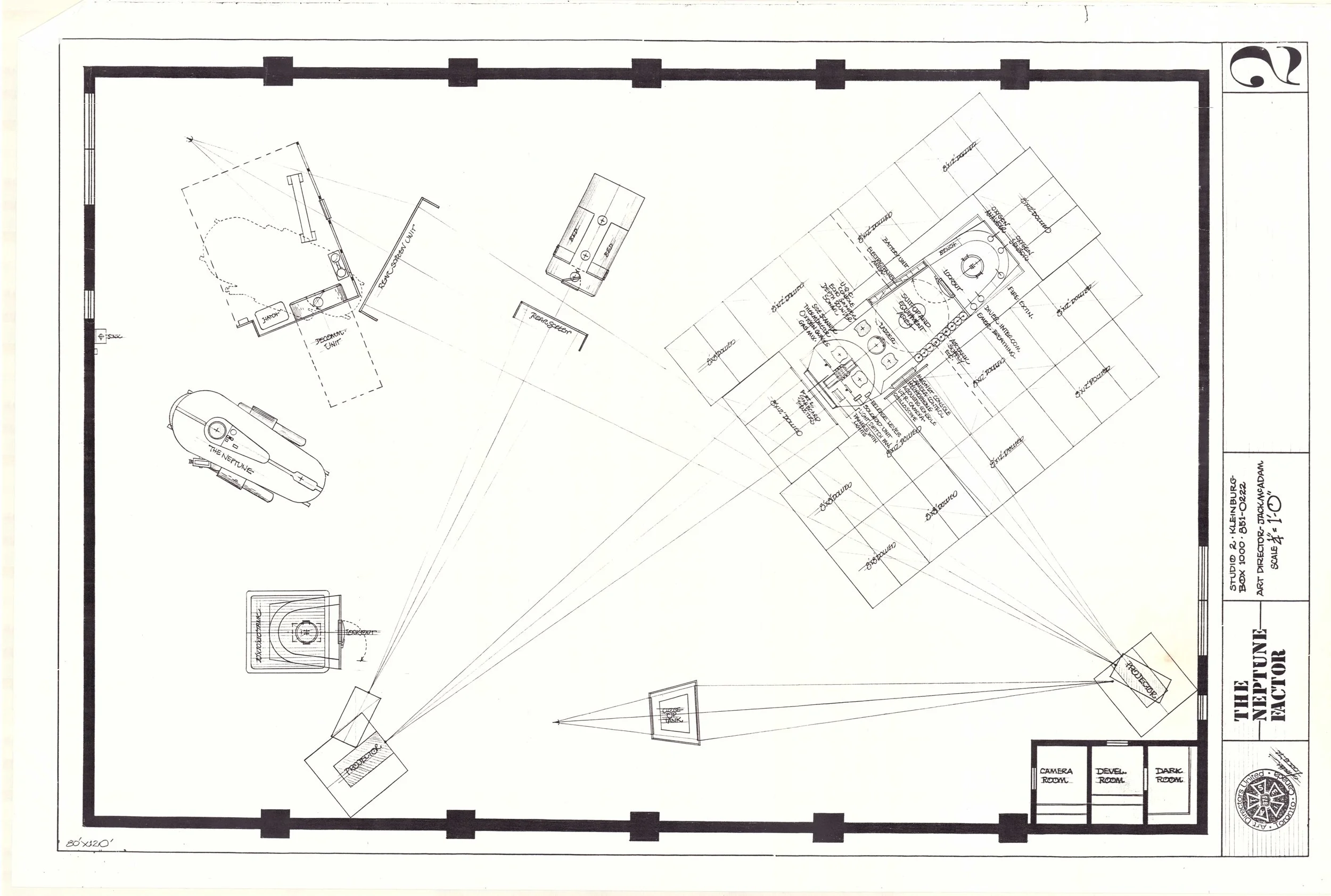
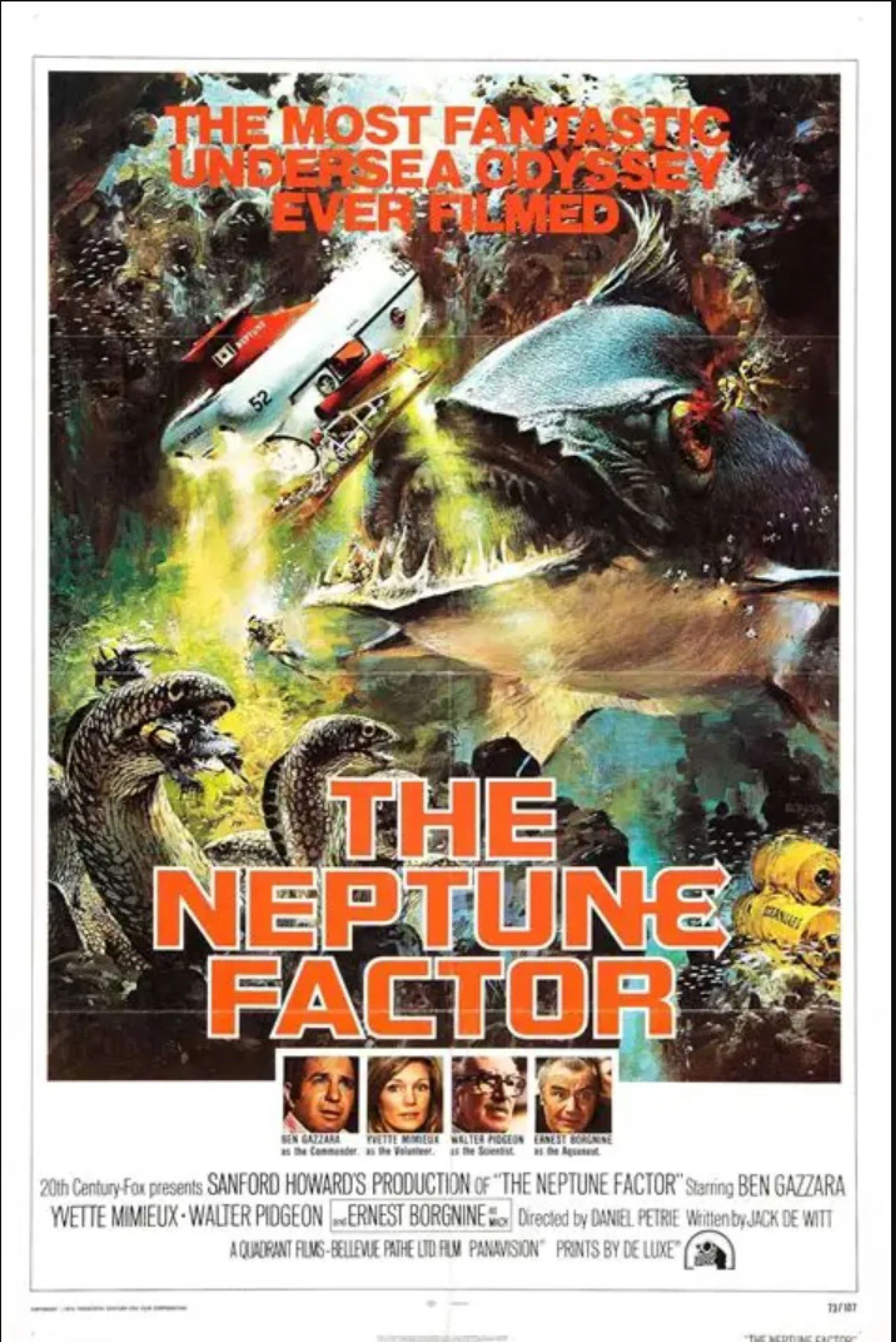
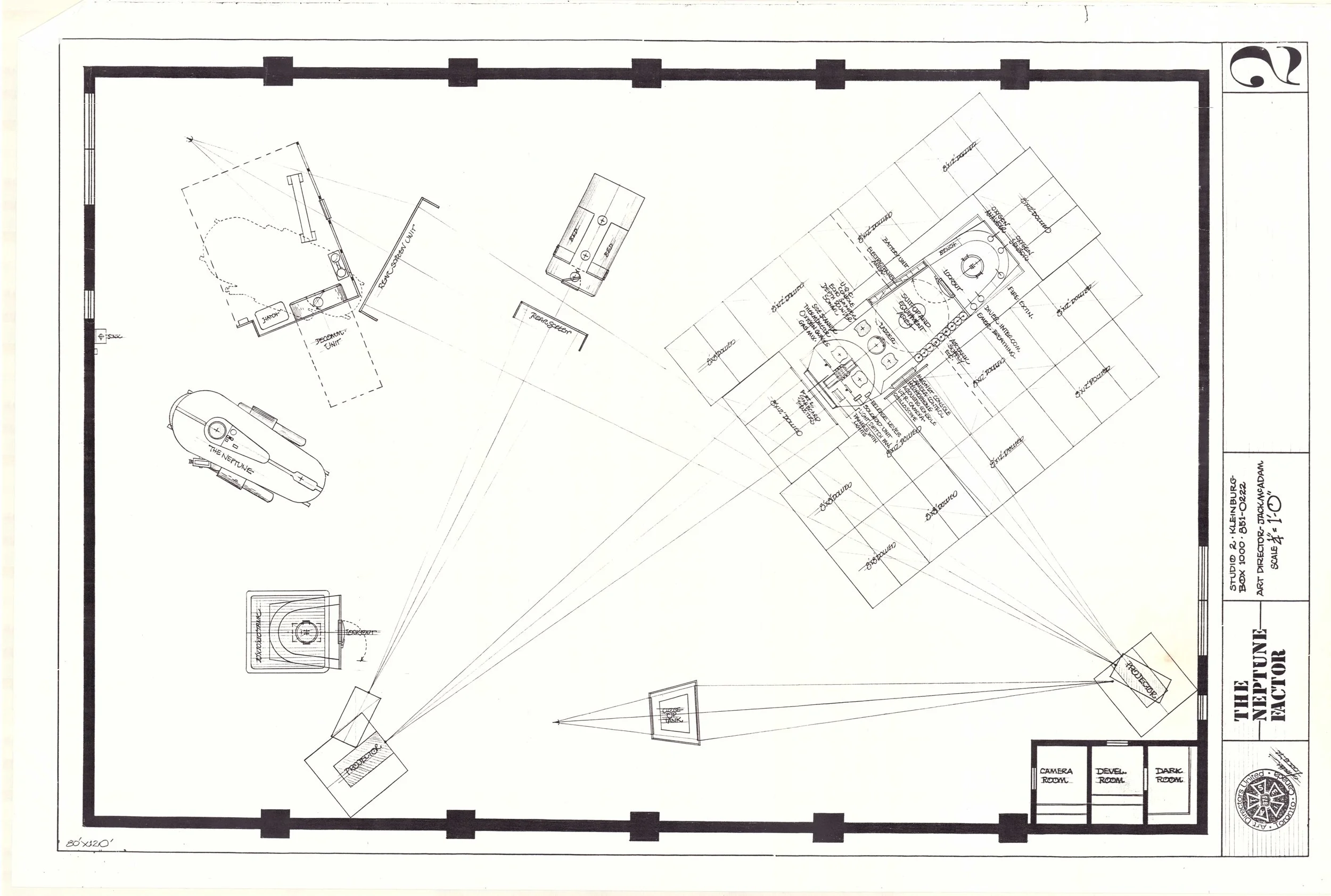
1972-3: The Neptune Factor
A Canadian-American disaster film directed by Daniel Petrie starring Ben Gazzara and Ernest Borgnine about a rescue mission to a sunken undersea laboratory.
Pioneering "Canuxploitation" Cinema: It is highly significant as one of the first major-budget, Hollywood-backed feature productions filmed and produced in Canada. This helped lay the early infrastructure for Canada's commercial film industry.
The 1970s Disaster Craze: Released just one year after The Poseidon Adventure, it was a prime, early example of studios rushing to capitalize on the 1970s disaster movie boom. It tried to merge the disaster genre with deep-sea exploration.
Unique Special Effects Technique: Instead of creating expensive monsters from scratch, the special effects crew opted for a unique technique: they built highly detailed miniature models of the sub and habitats, placed them into actual aquariums, and filmed real, normal-sized fish swimming around them. The optical enlargement made ordinary fish look like giant sea monsters.
Extensive Scientific Consulting: Producer Sandy Howard spent two years consulting with dozens of actual oceanographers, marine biologists, and the Canadian Armed Forces to try and ground the film's technology and submarine designs in realistic science before the "giant monster" plot took over.
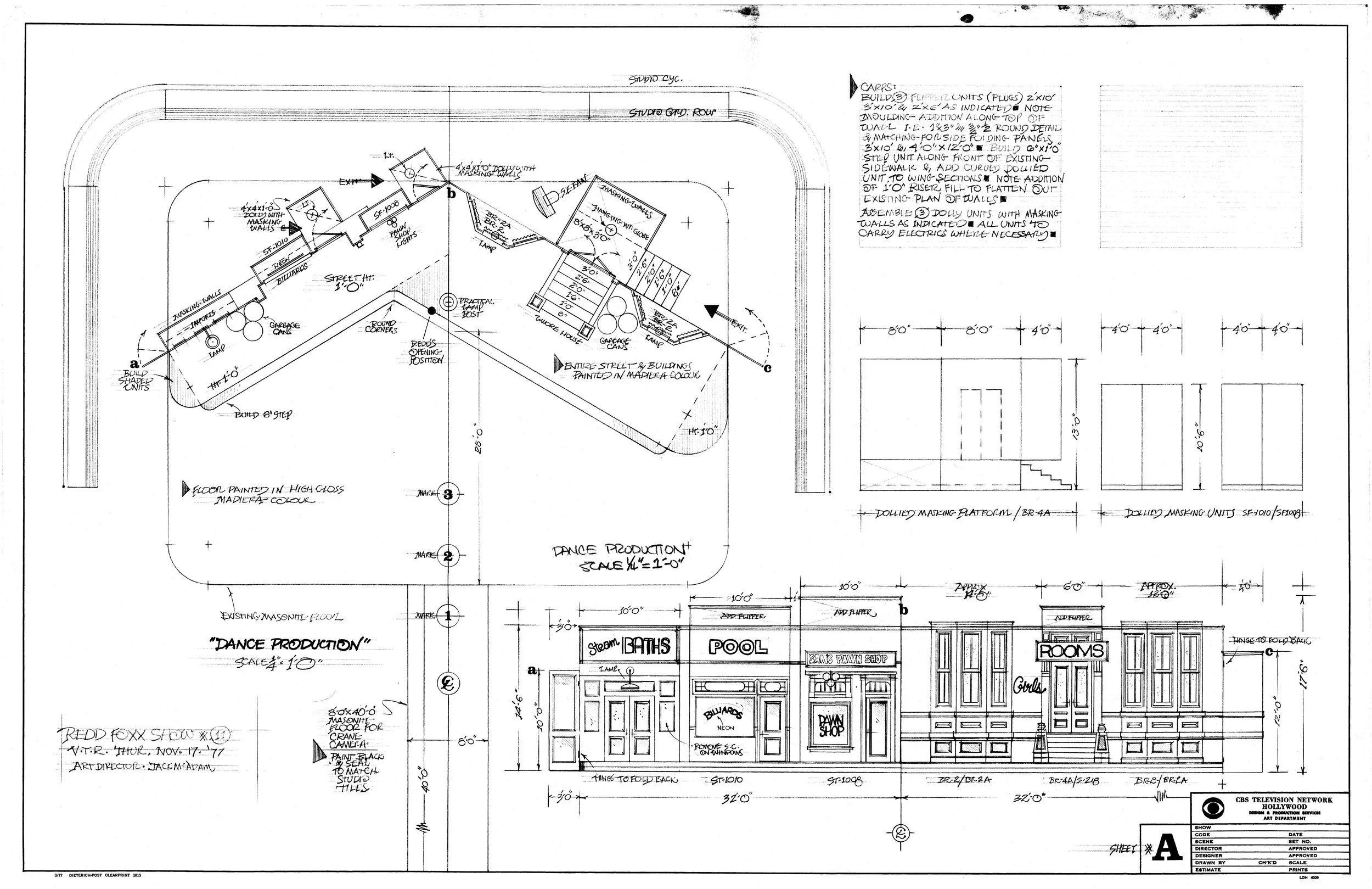
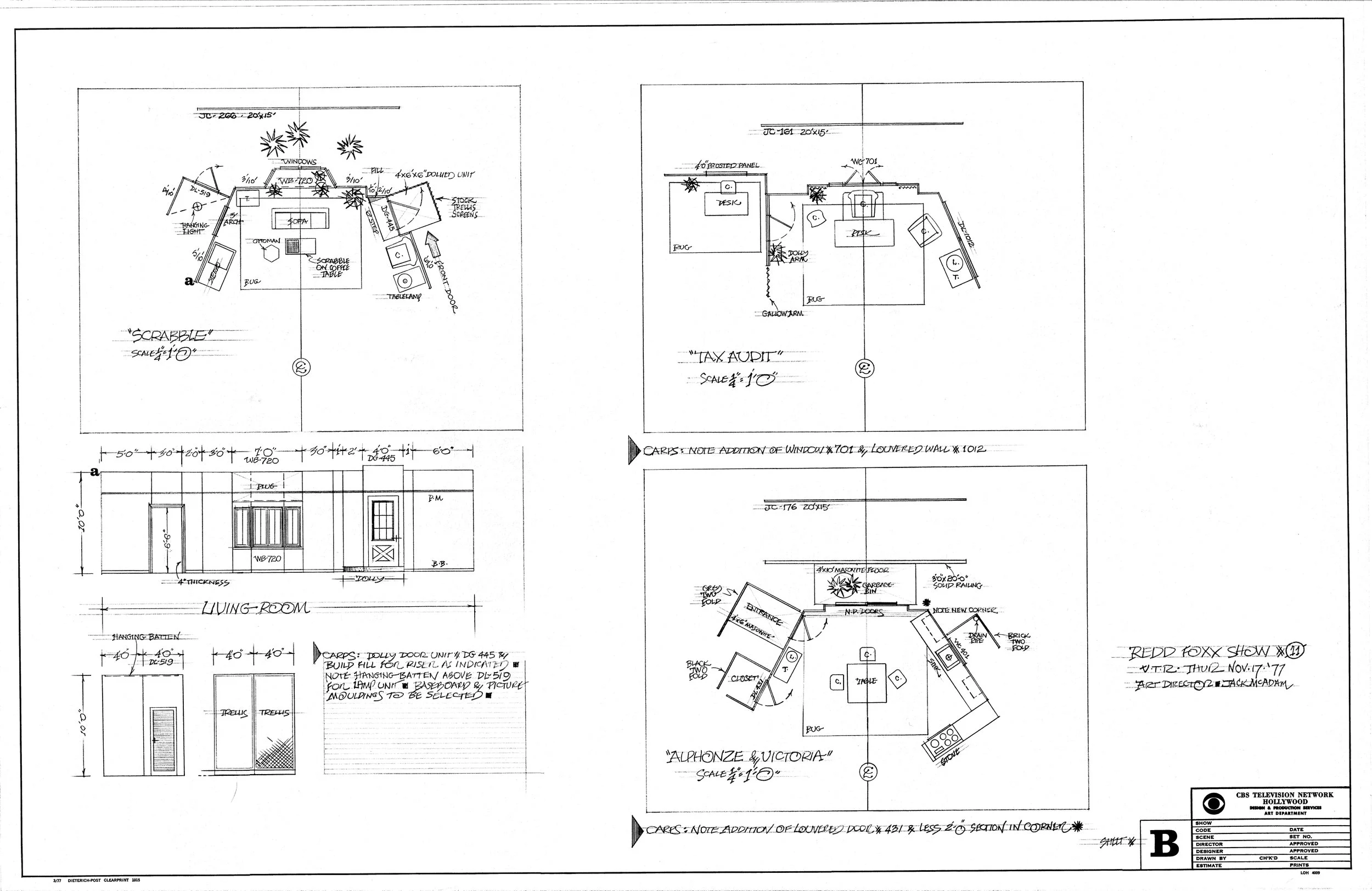
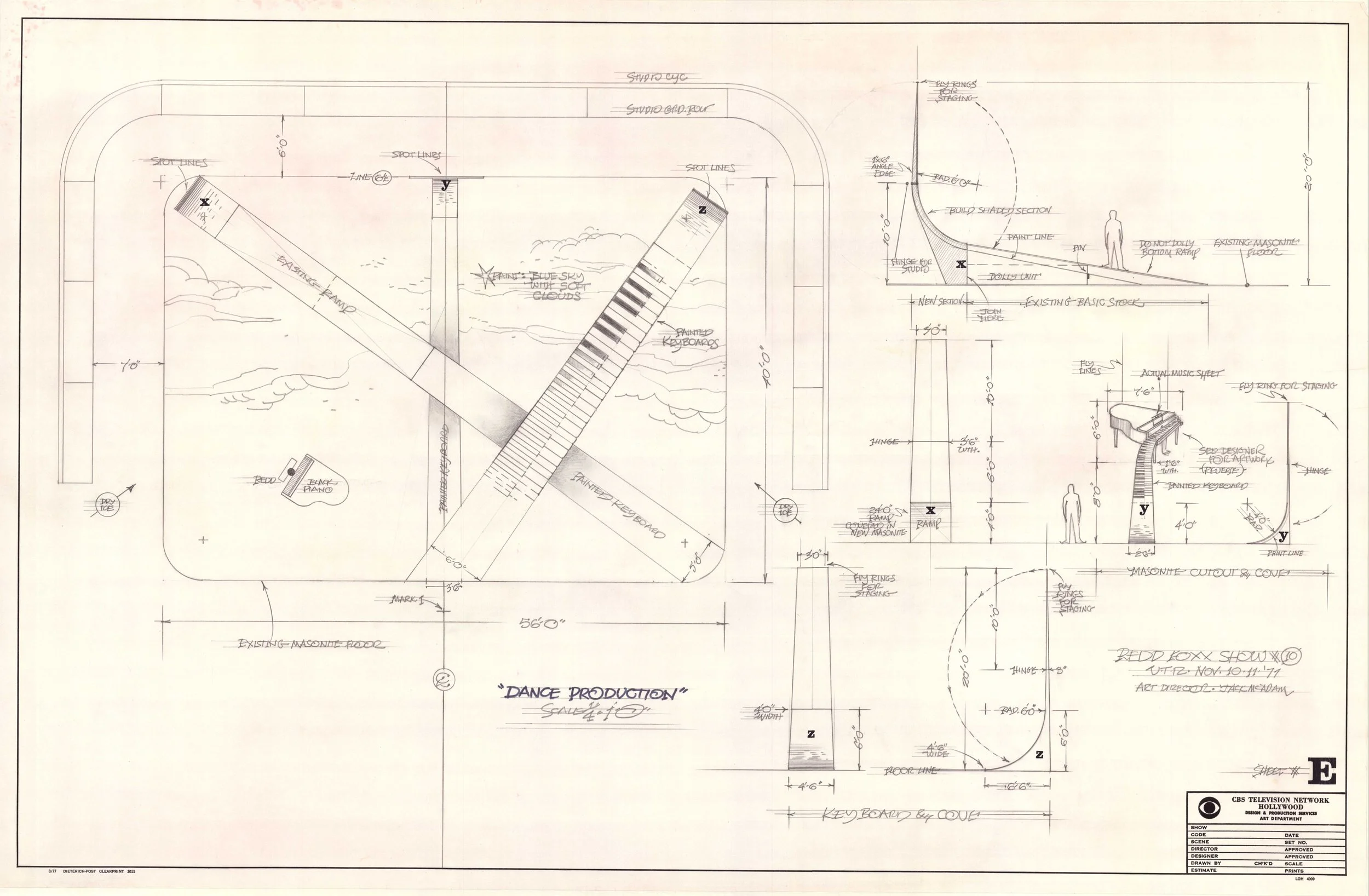
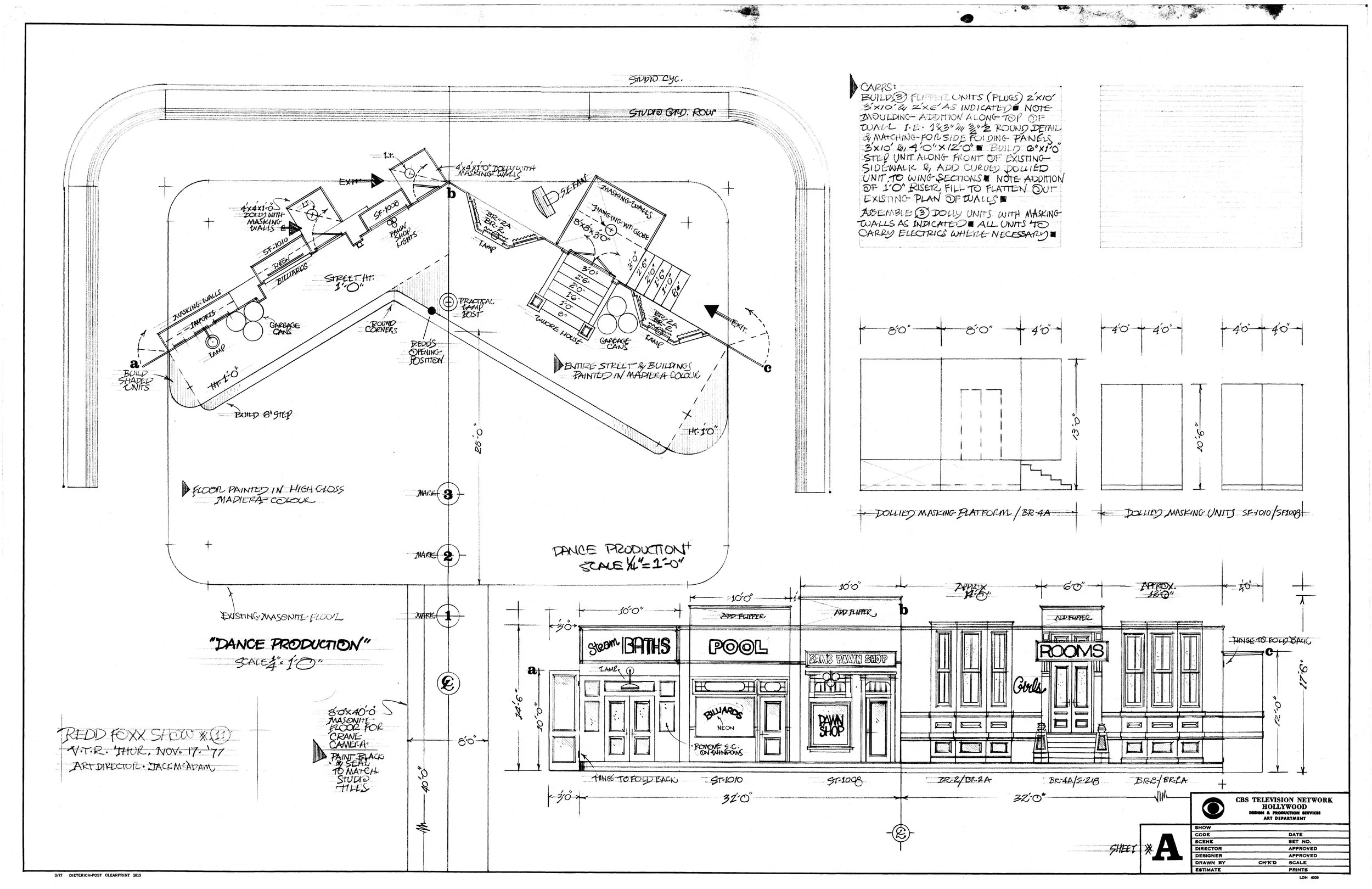
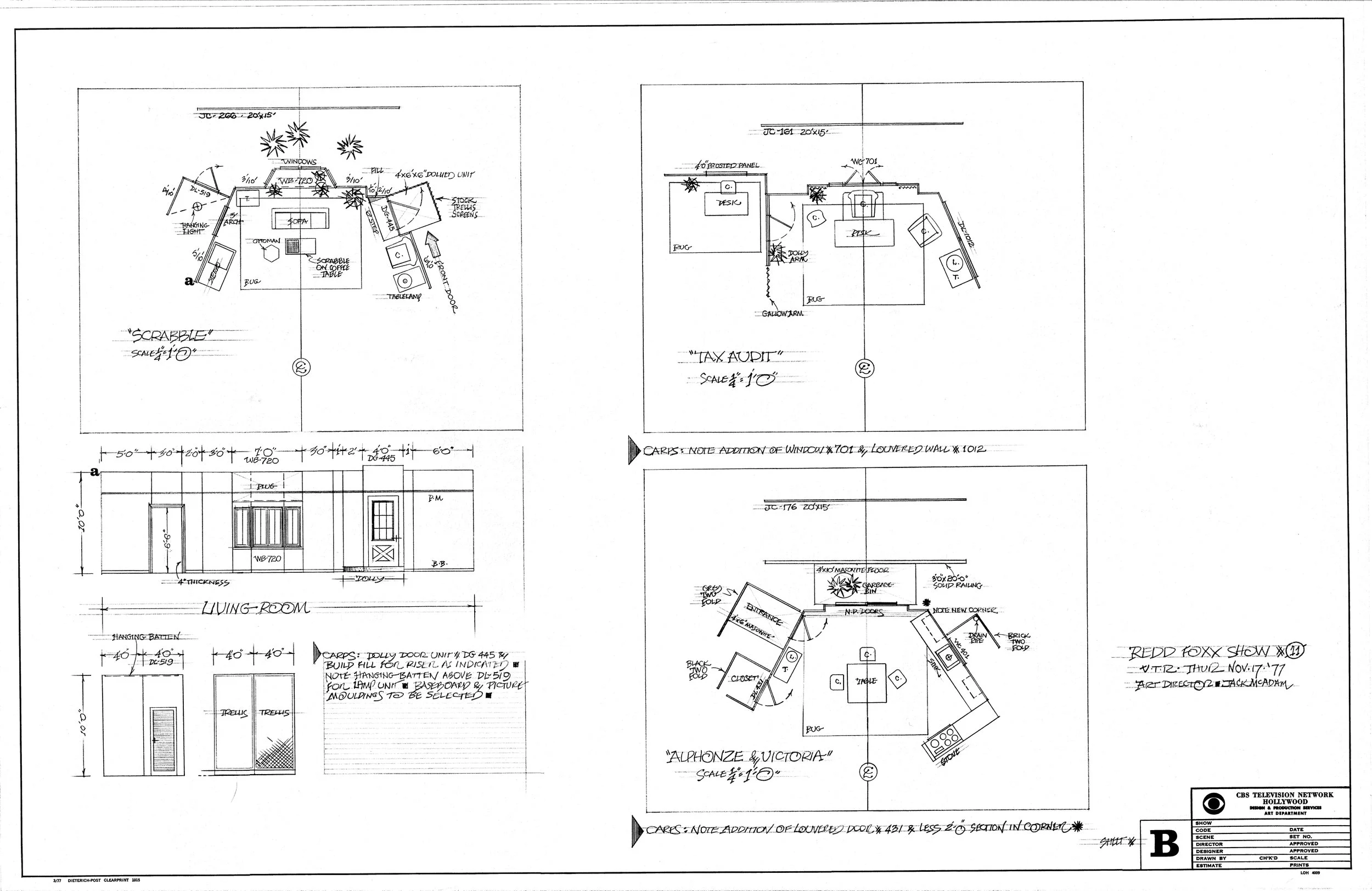
1977: The Red Foxx Show
The Redd Foxx Comedy Hour (also known simply as The Redd Foxx Show) was an ABC variety program that debuted in September 1977, and ran for 12 episodes before its cancellation in 1978. Comedy legend Redd Foxx—fresh off his massive success starring as Fred G. Sanford on NBC's groundbreaking sitcom Sanford and Son—abruptly left his hit sitcom to host and produce this short-lived variety show.
CBS vs. ABC: The three blueprints on the left show CBS Television Network on the bottom right, but the show was aired on ABC. During the 1970s, it was a very common industry practice for networks to rent out studio space from one another if their own lots were full. ABC's main Hollywood studios (the Prospect Avenue lot) were heavily utilized at the time, leading the production company, Blye-Einstein Productions, to lease state-of-the-art stage space directly from CBS. While the show was broadcast on the ABC network, The Redd Foxx Comedy Hour was actually taped at Studio 43 inside CBS Television City (located at 7800 Beverly Boulevard in Los Angeles). Studio 43 at CBS Television City was a premier space, famously used for other legendary programs like The Carol Burnett Show.
It Killed a Top-Tier Sitcom: Foxx's decision to jump networks from NBC to ABC directly caused the cancellation of Sanford and Son, which was one of the highest-rated shows on television at the time.
A Platform for Black and Alt-Comedy Talent: Foxx used his creative control to actively showcase Black performers and avant-garde comics who were traditionally ignored by mainstream network variety shows. He regularly brought on old "Chitlin' Circuit" nightclub peers alongside rising alternative stars like Andy Kaufman.
The "Watering Down" of an Icon: The show's struggle highlighted the friction between a raw, boundary-pushing comic and rigid 1970s network television rules. To make Foxx safe for primetime family viewing, ABC heavily censored his act, leaving a compromise that pleased neither his core fans nor general variety-show audiences.
End of an Era for Variety TV: The quick failure of the show, despite Foxx’s immense star power, was a major historical marker indicating that the classic TV variety show genre was rapidly dying out. Audiences were shifting their attention toward serialized dramas and standard sitcoms.
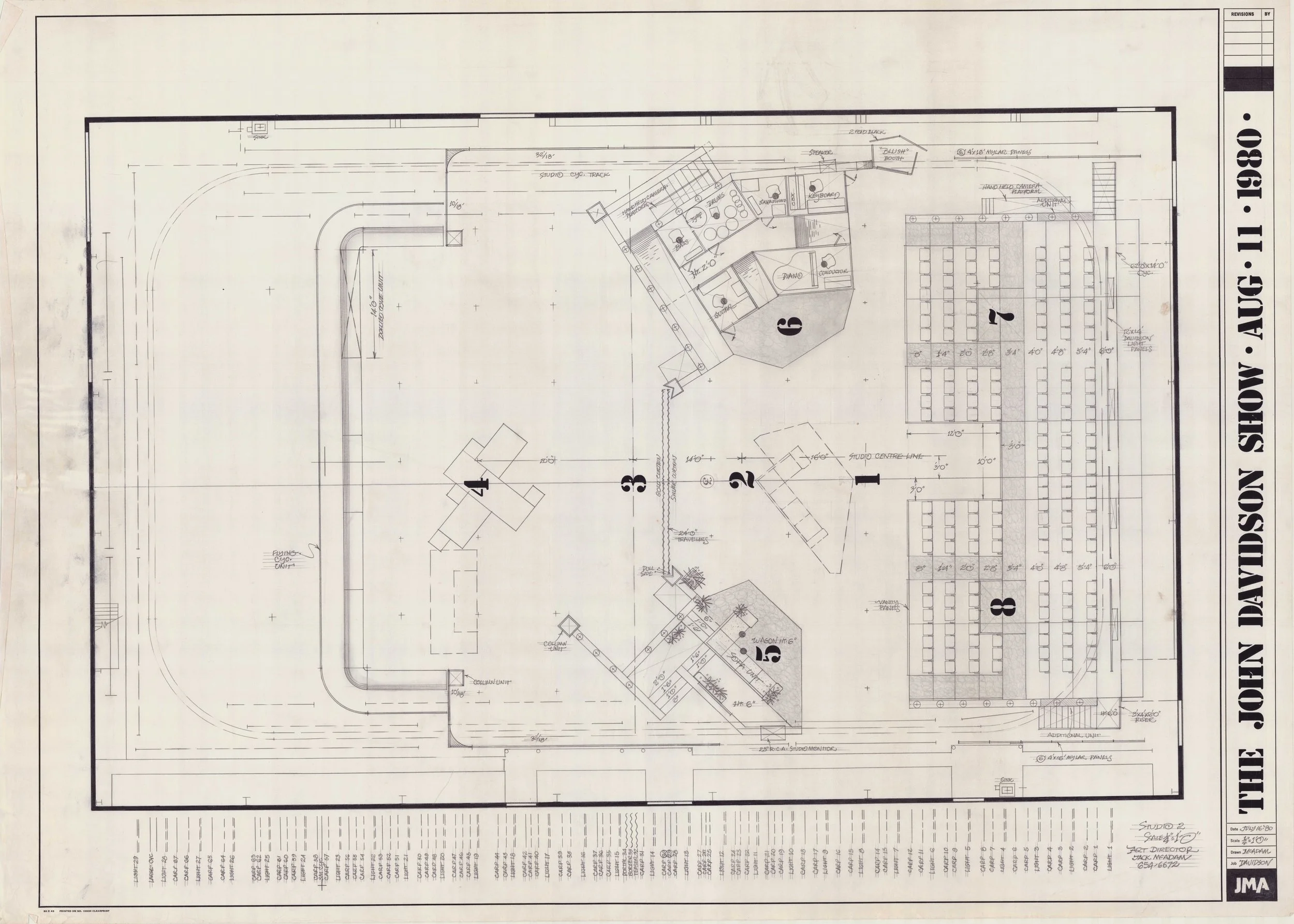
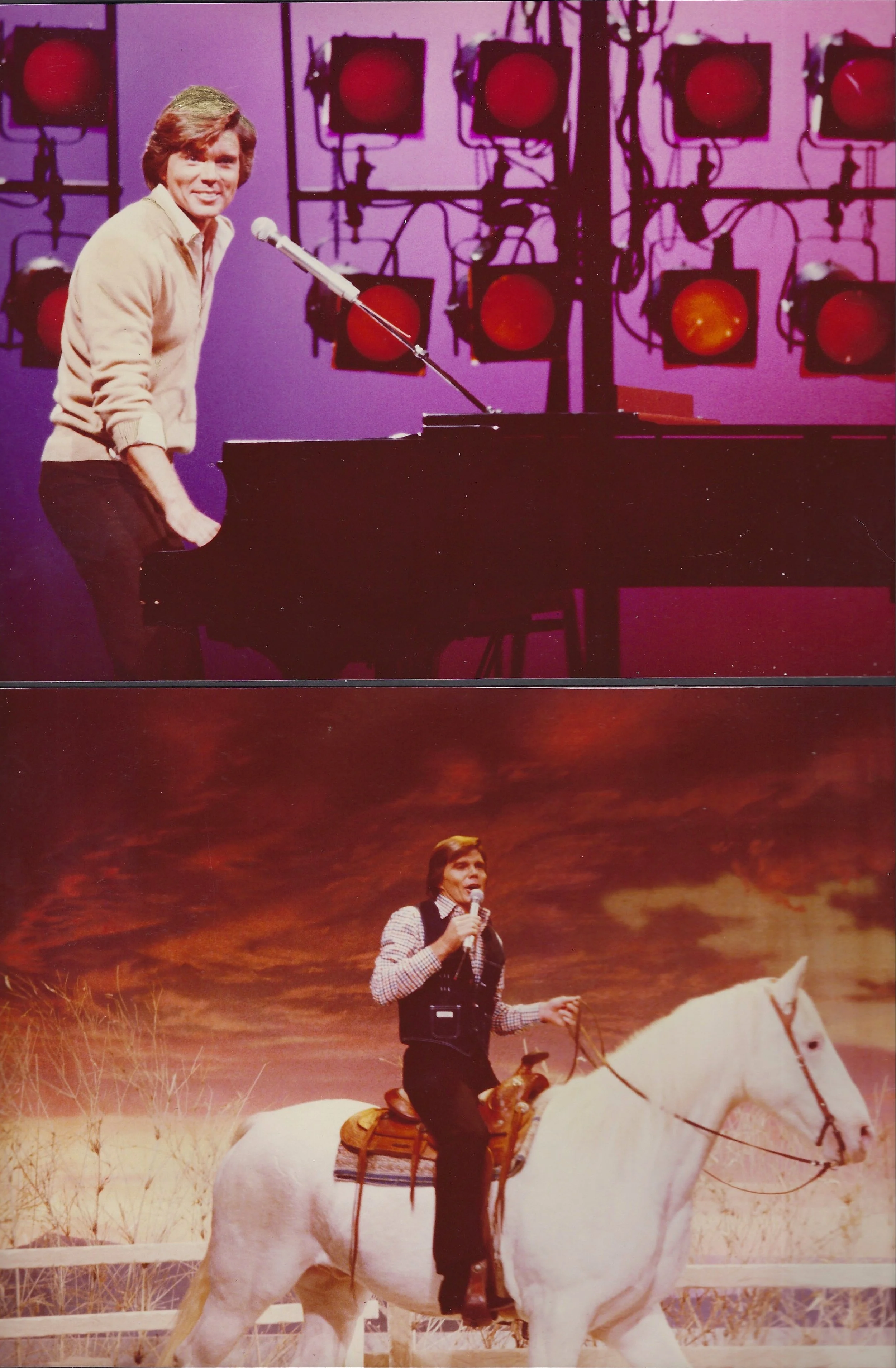
1980: The John Davidson Show
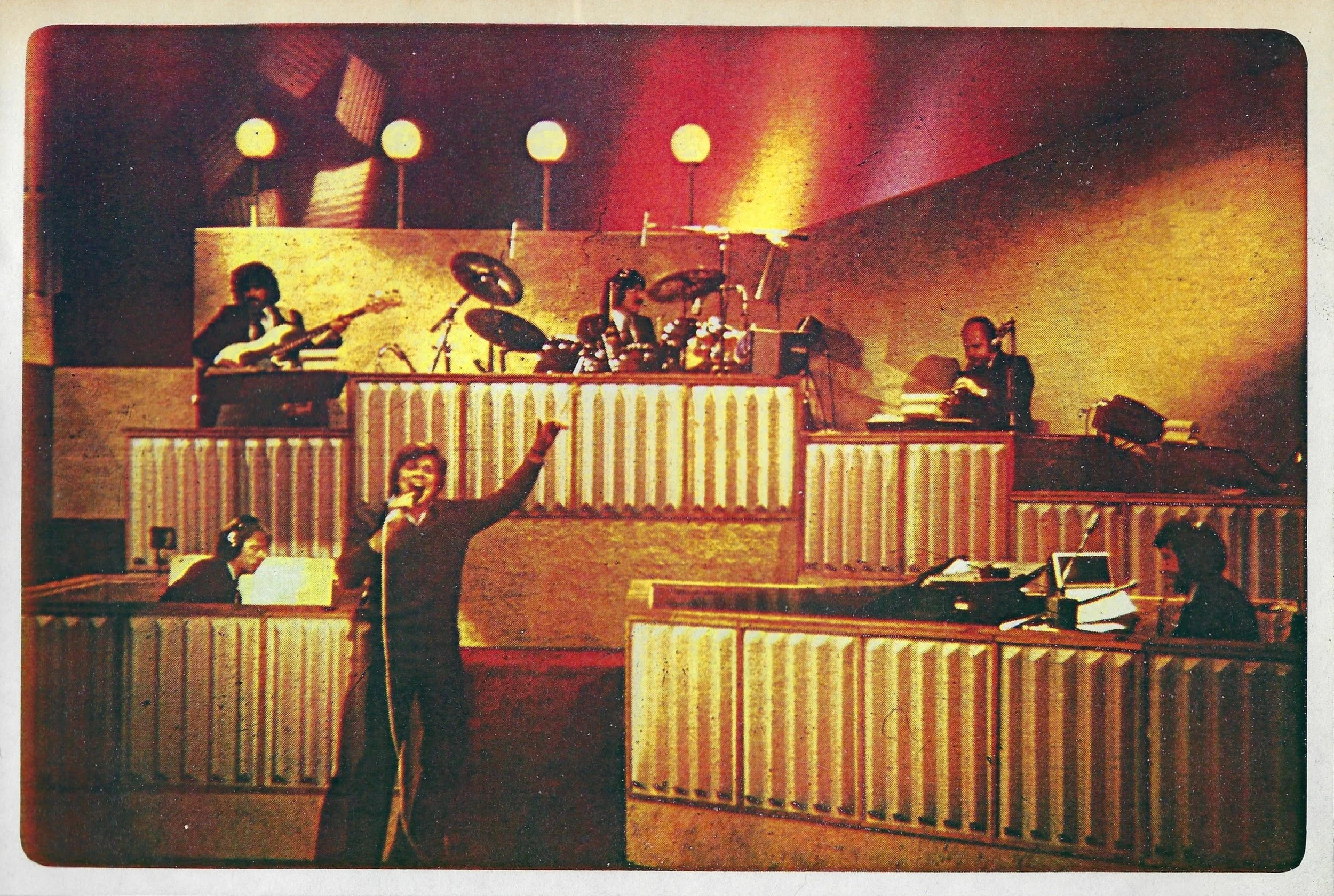
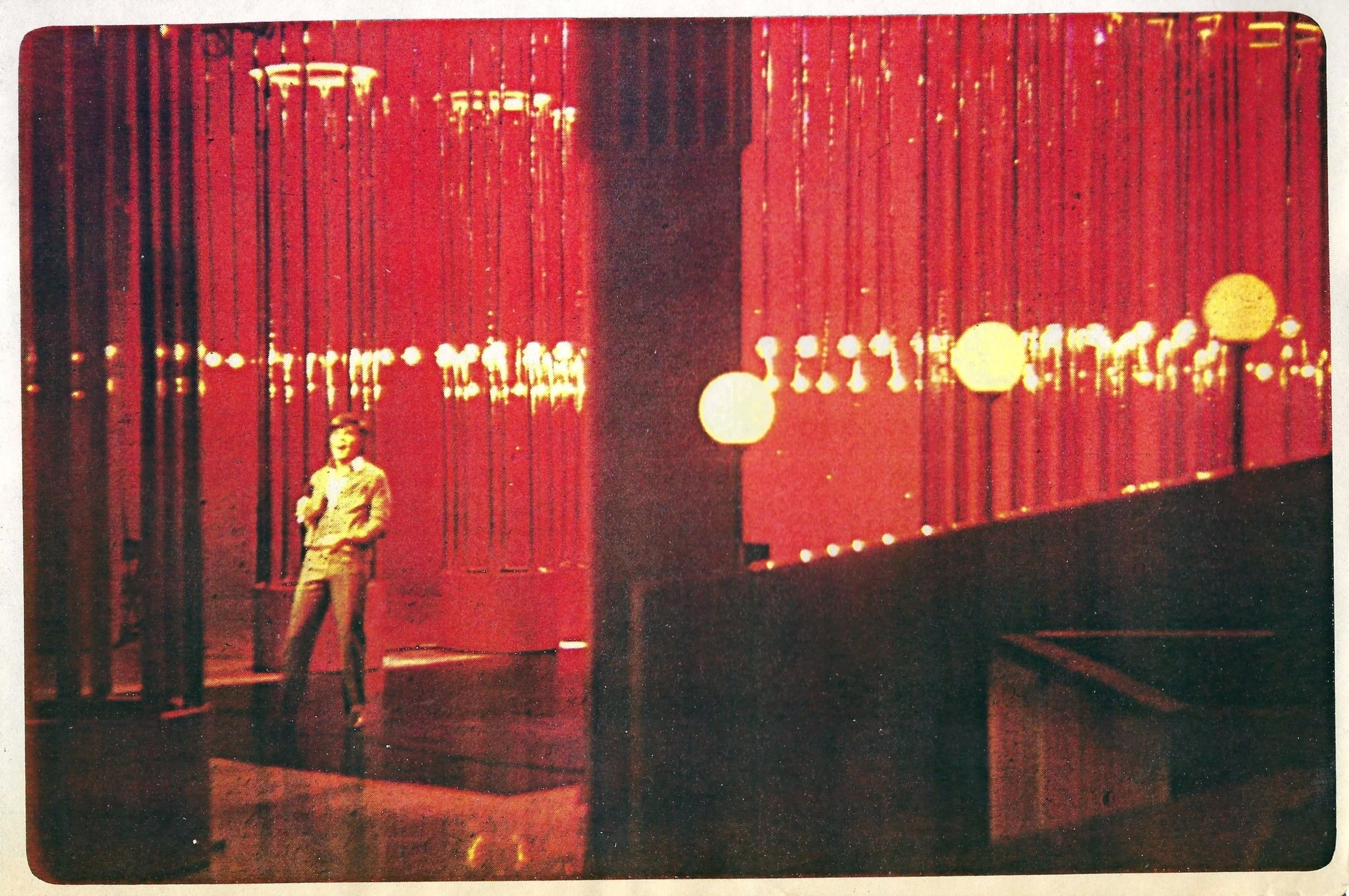
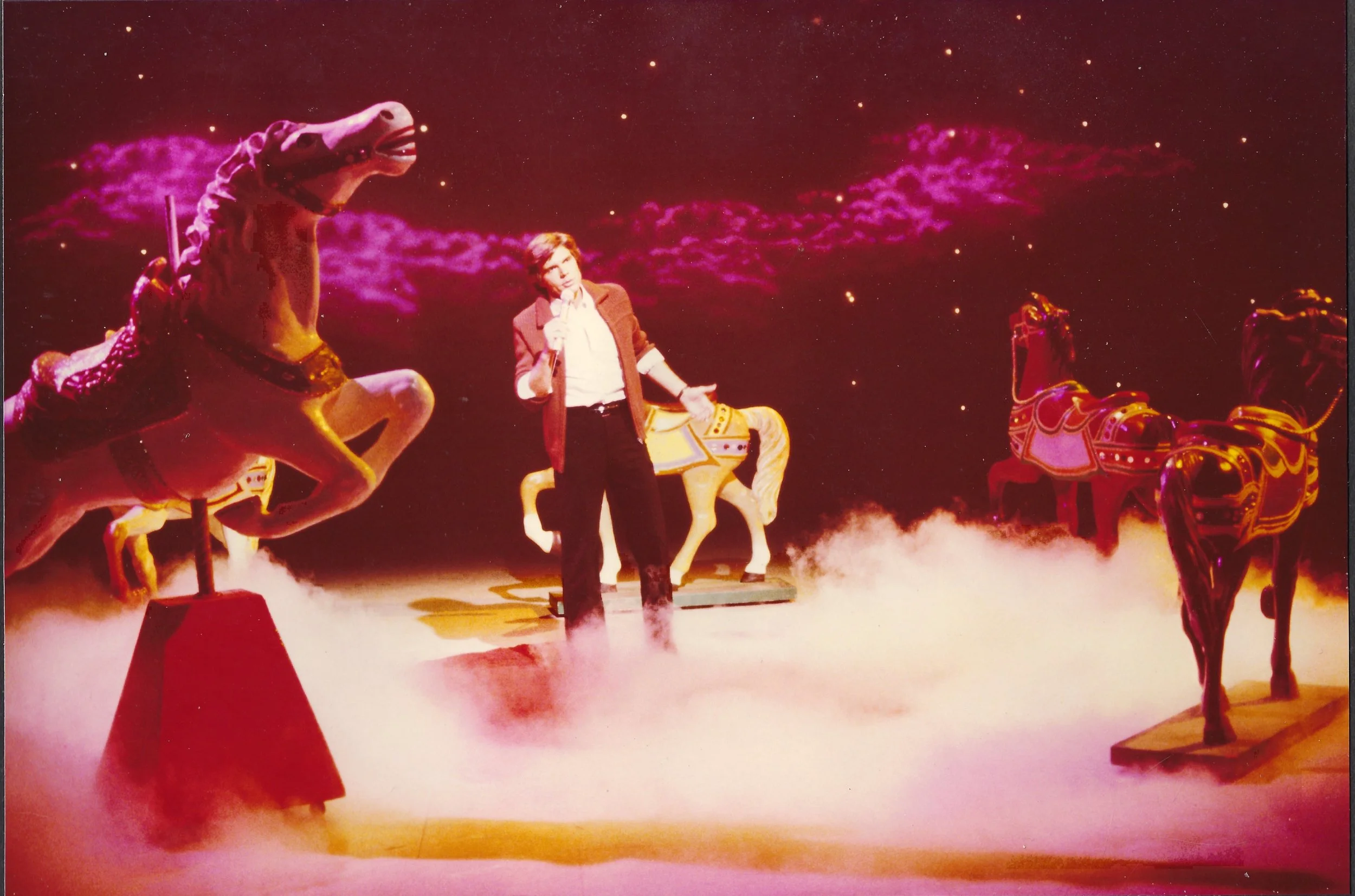
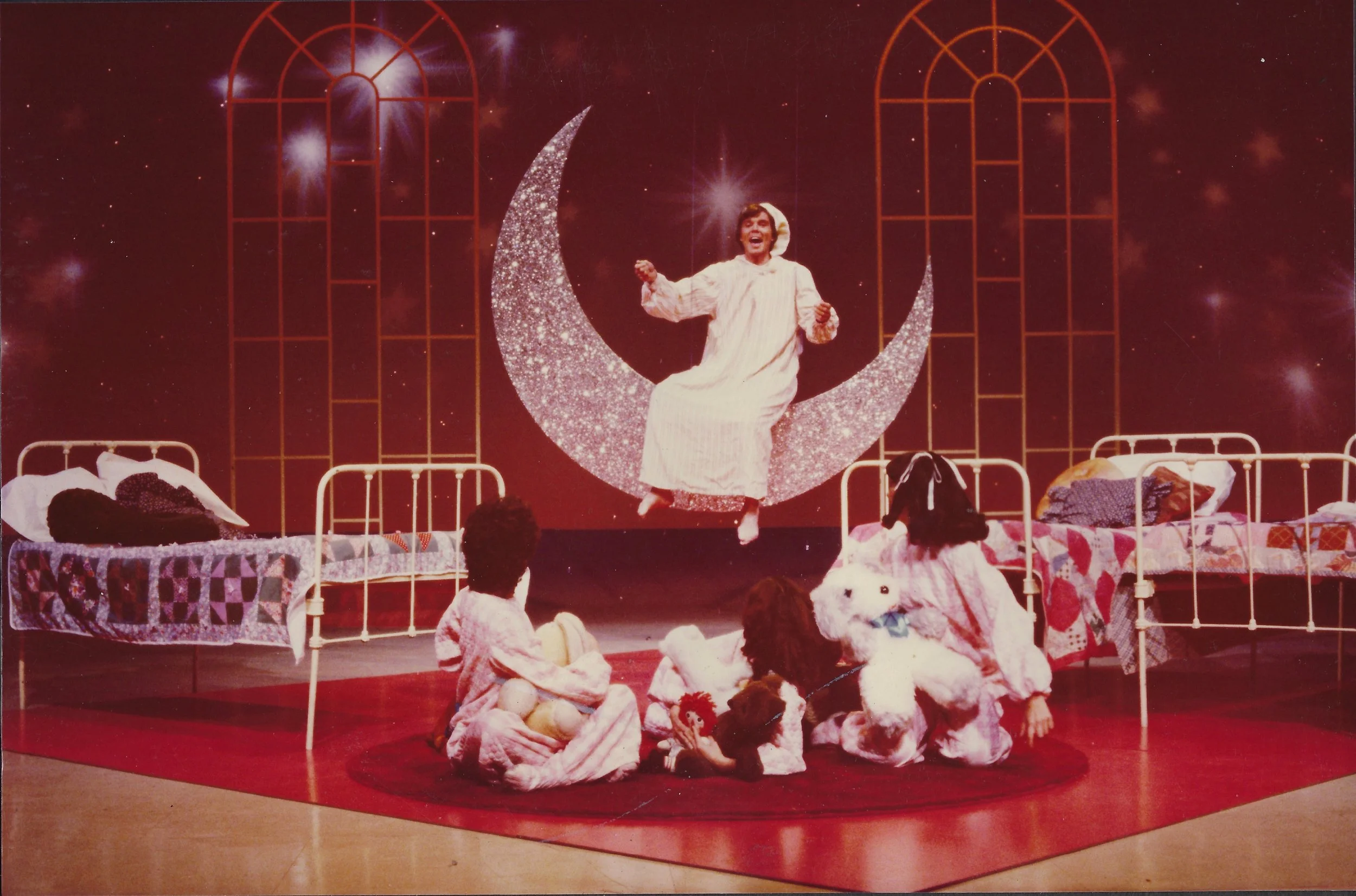
The John Davidson Show premiered on June 30, 1980, as a nationally syndicated daytime talk and variety program replacing the long-running Mike Douglas Show. It served as Group W Productions' major flagship daytime transition and cemented host John Davidson as a defining 1980s pop-culture fixture alongside his concurrent primetime success on That's Incredible!
Cultural Significance
Successor Status: Stepped directly into the massive syndicated time slots previously held by The Mike Douglas Show, marking a shift in early-1980s daytime television syndication.
Stardom Peak: Highlighted Davidson’s transition from 1960s/70s singing and variety into a ubiquitous 1980s media personality who also hosted That's Incredible! and Hollywood Squares.
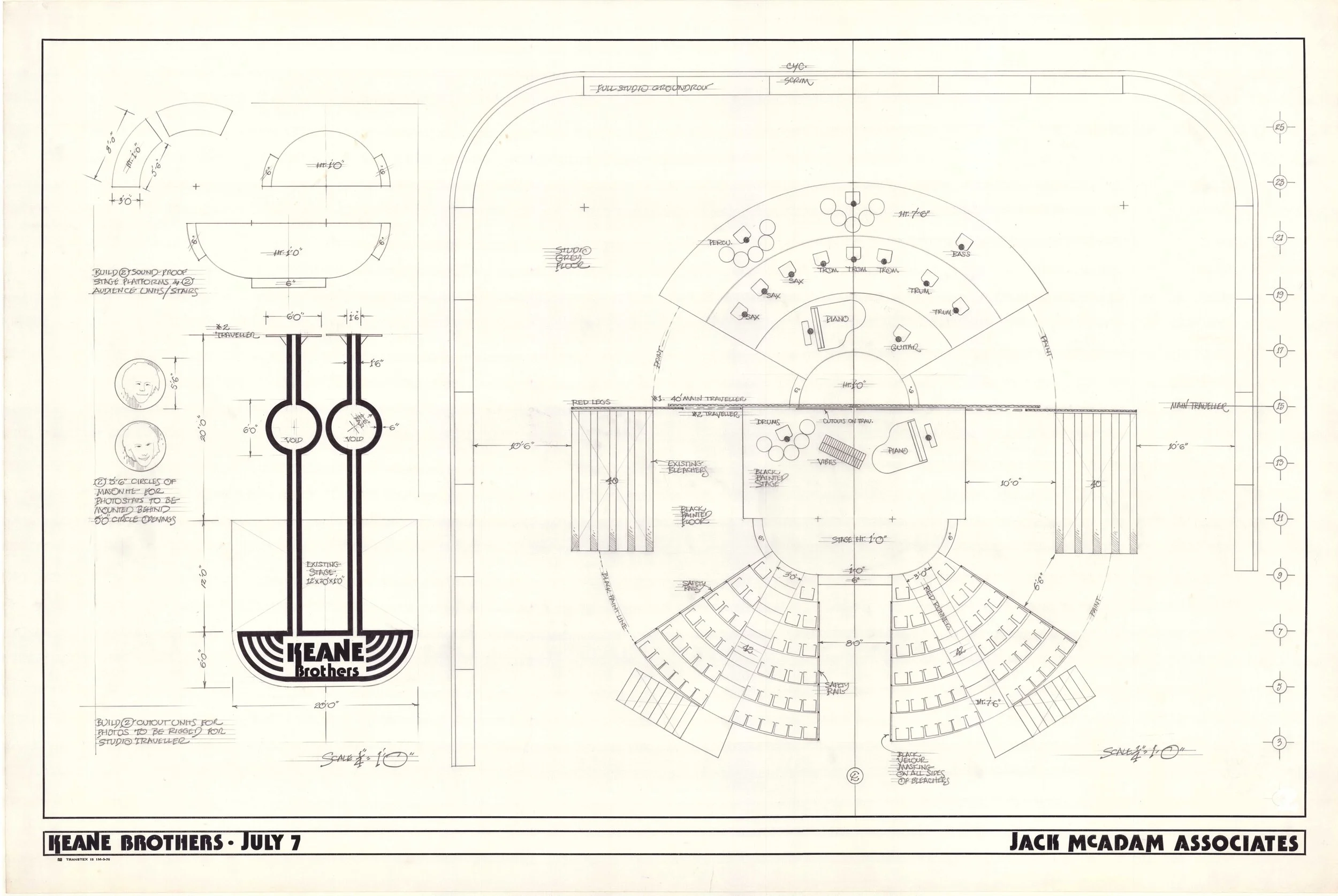
1982: Keane Brothers
The The Keane Brothers were an American pop music duo active from 1976 to 1982, made up of pre-teen brothers Tom Keane (piano/vocals) and John M. Keane (drums). They were notable for being child prodigies who set a record as the youngest people to host a prime-time network television variety show.
Overview of the Duo
Background: Sons of Bob Keane, the founder of Del-Fi Records.
Music Career: Released bubblegum pop and West Coast AOR style music, collaborating with elite session players and producers like David Foster.
Television Milestone: Hosted The Keane Brothers Show on CBS in the summer of 1977 when John was 12 and Tom was 13. Achieved historical recognition in television by anchoring a national prime-time variety series at pre-teen ages.
Industry Transition: After the duo split, both brothers transitioned into highly successful behind-the-scenes music careers. Tom became a prominent songwriter for major R&B/pop acts (like Chaka Khan and Chicago), while John became a top-tier television composer, scoring major hits like CSI: Crime Scene Investigation and The Amazing Race.
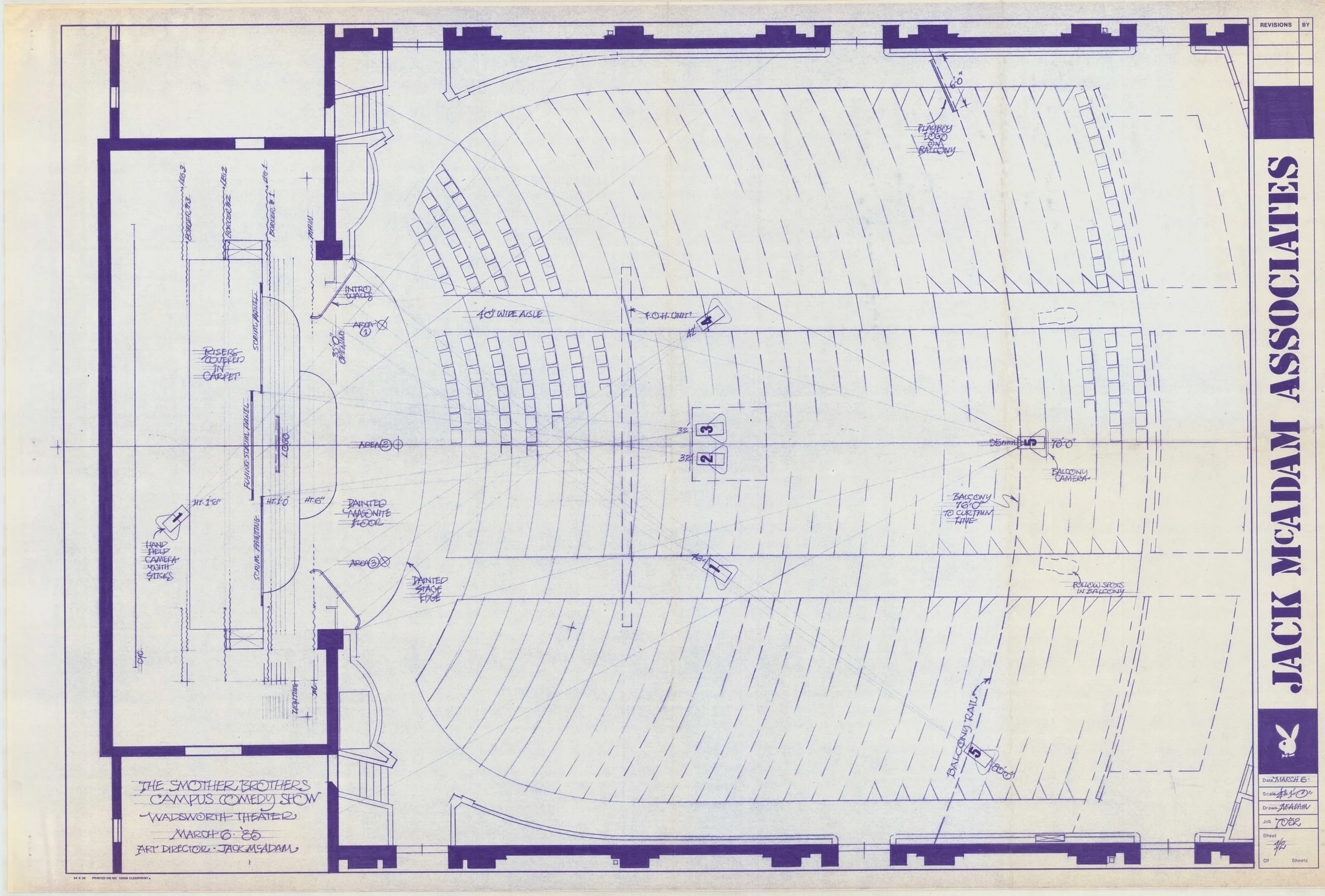
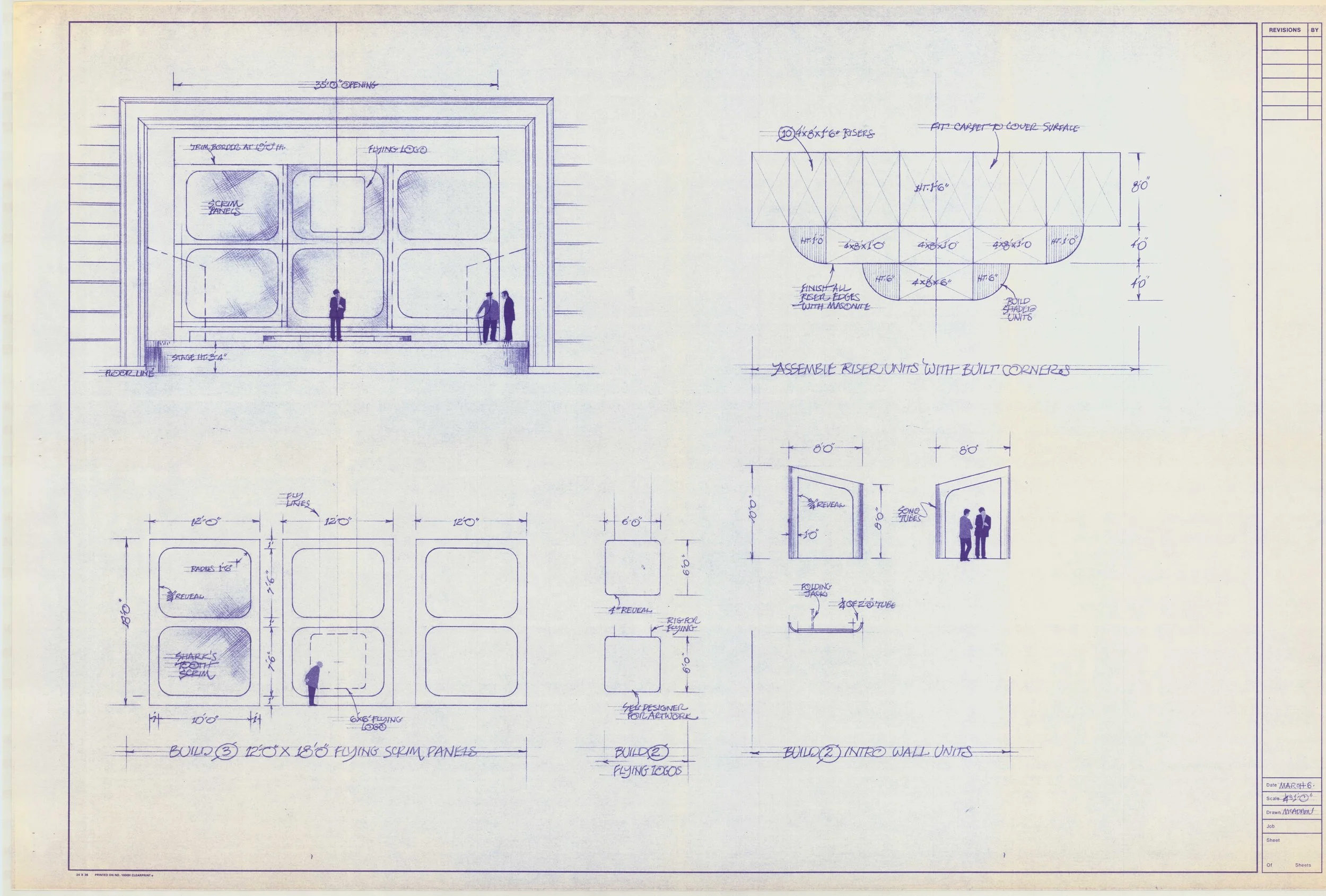
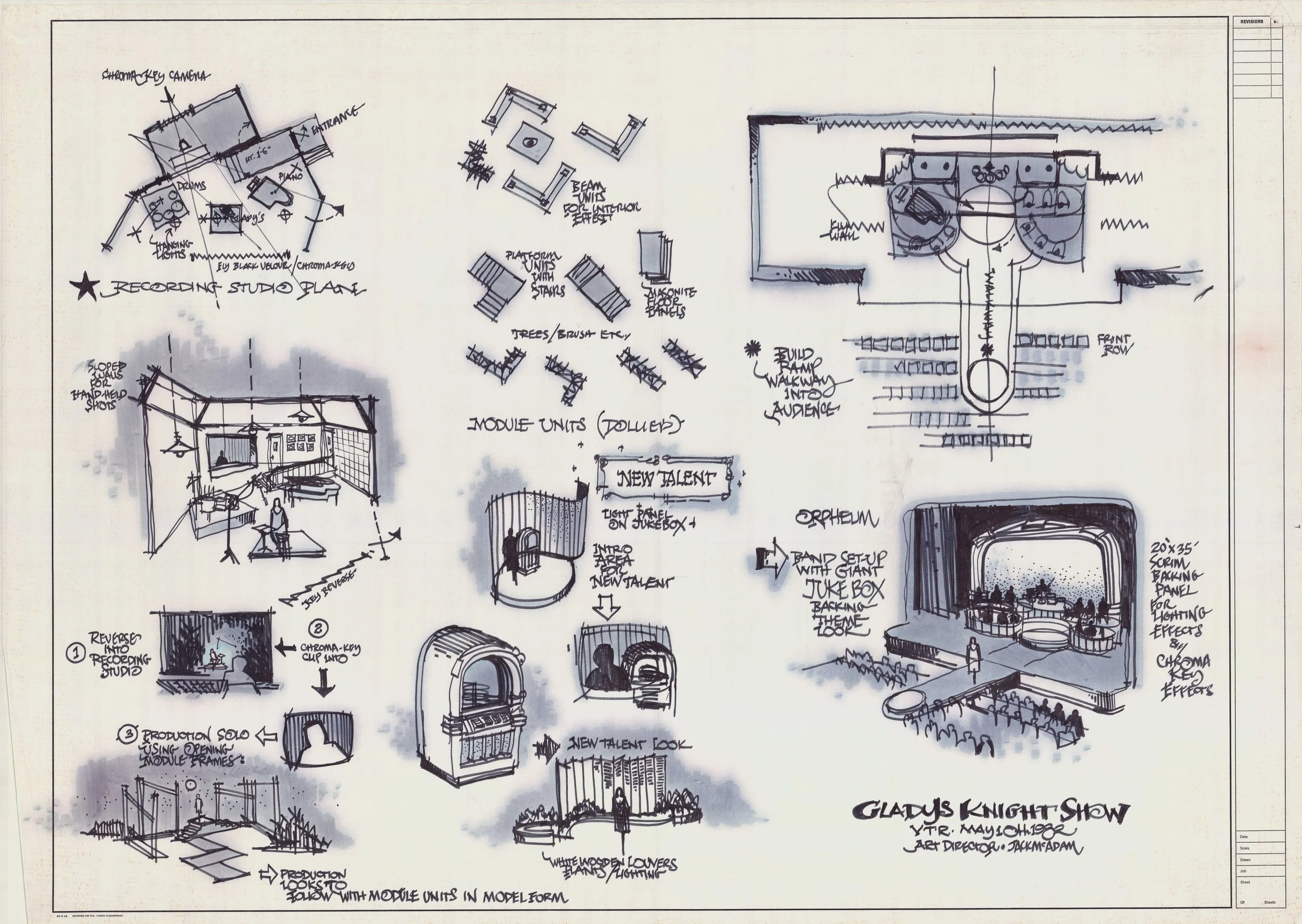
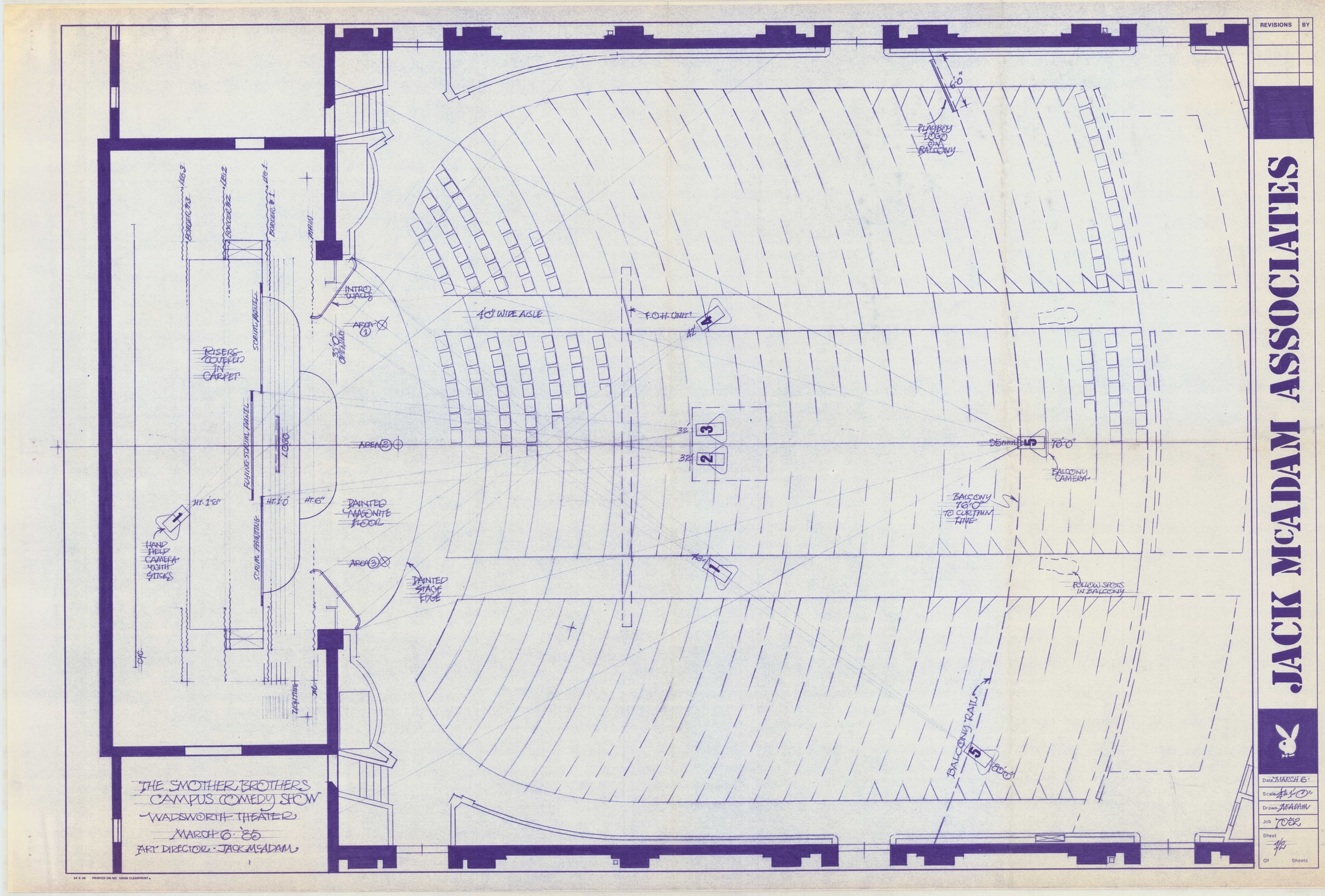
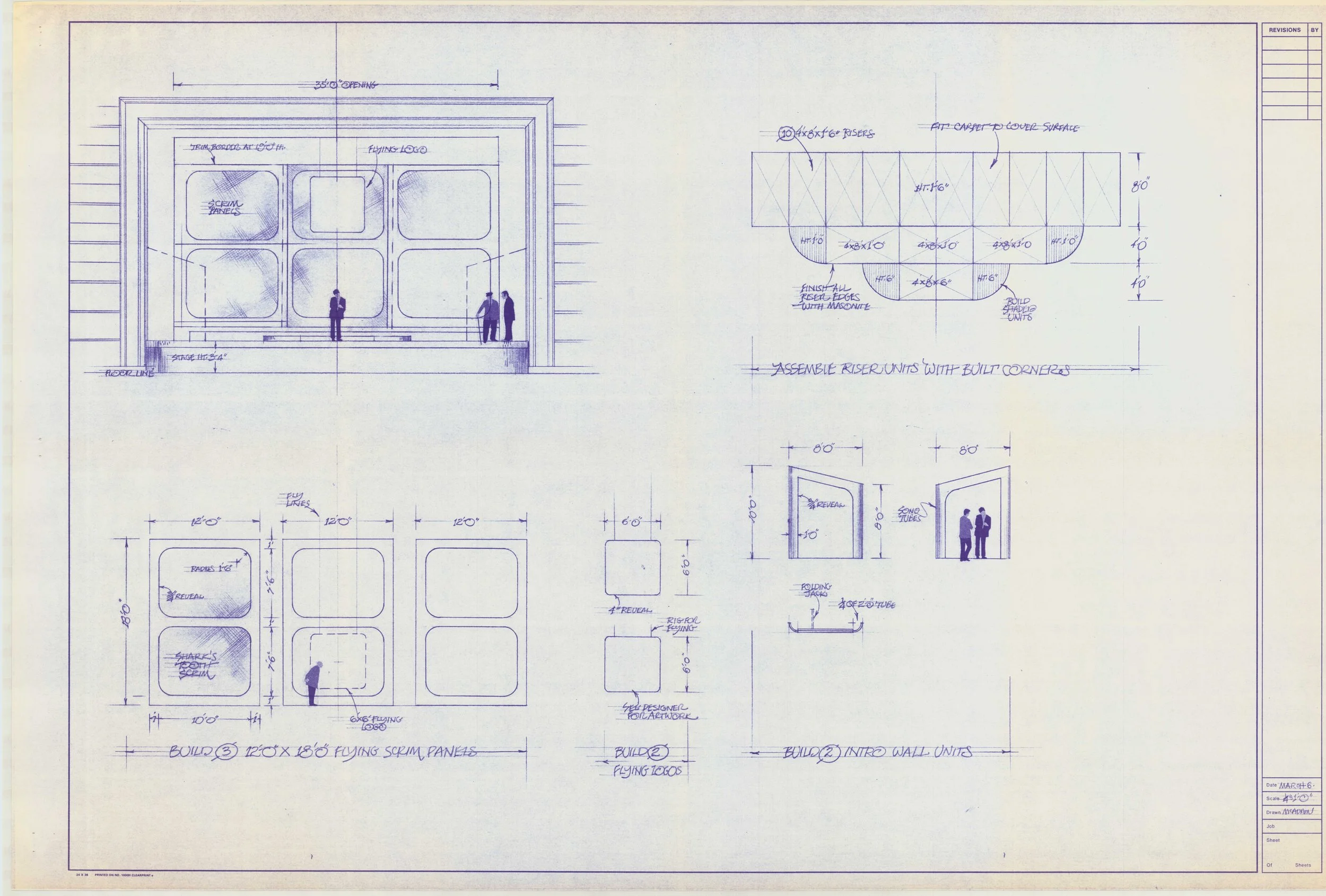
1985: The Smothers Brothers at the Wadsworth Theater, “Campus Comedy Show”
The Smothers Brothers were Tom and Dick, an American comedy and musical duo known for folk songs, sibling rivalry, and sharp political satire. Their groundbreaking television show revolutionized 1960s media, pushed free speech limits, and paved the way for modern political satire.
Cultural and Political Impact
Pioneering Satire: Their hit TV show, The Smothers Brothers Comedy Hour, used comedy to tackle heavy political and social issues of the Vietnam War era.
Censorship Battles: They famously fought CBS network censors over sketches mocking the government and war, leading to their controversial firing in 1969.
Platform for Legends: The program featured counterculture icons and hosted the American television debuts of major musical acts like The Who.
Comedy Style and Act
The Sibling Dynamic: Tommy played the acoustic guitar and acted naive and confused, while Dick played the double bass and acted as the straight man.
Classic Lines: Their routines frequently devolved into arguments, highlighted by Tommy’s famous catchphrase, "Mom always liked you best!”
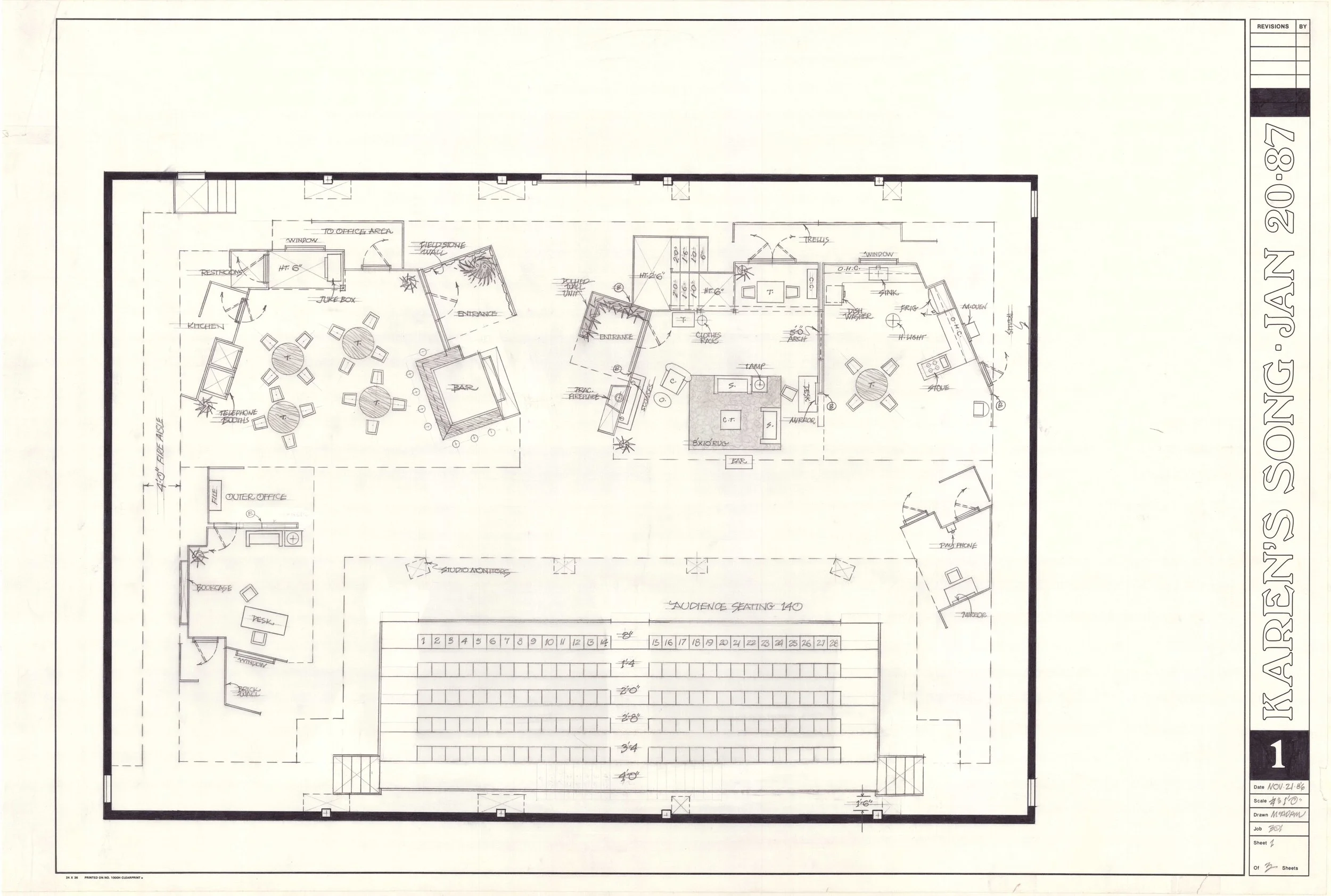
1987: Karen’s Song
Karen’s Song is not a song, but rather a 1987 American television sitcom starring Patty Duke that aired on the Fox Network. It is notable for featuring an early regular television role for actress Teri Hatcher before she achieved fame on Desperate Housewives.
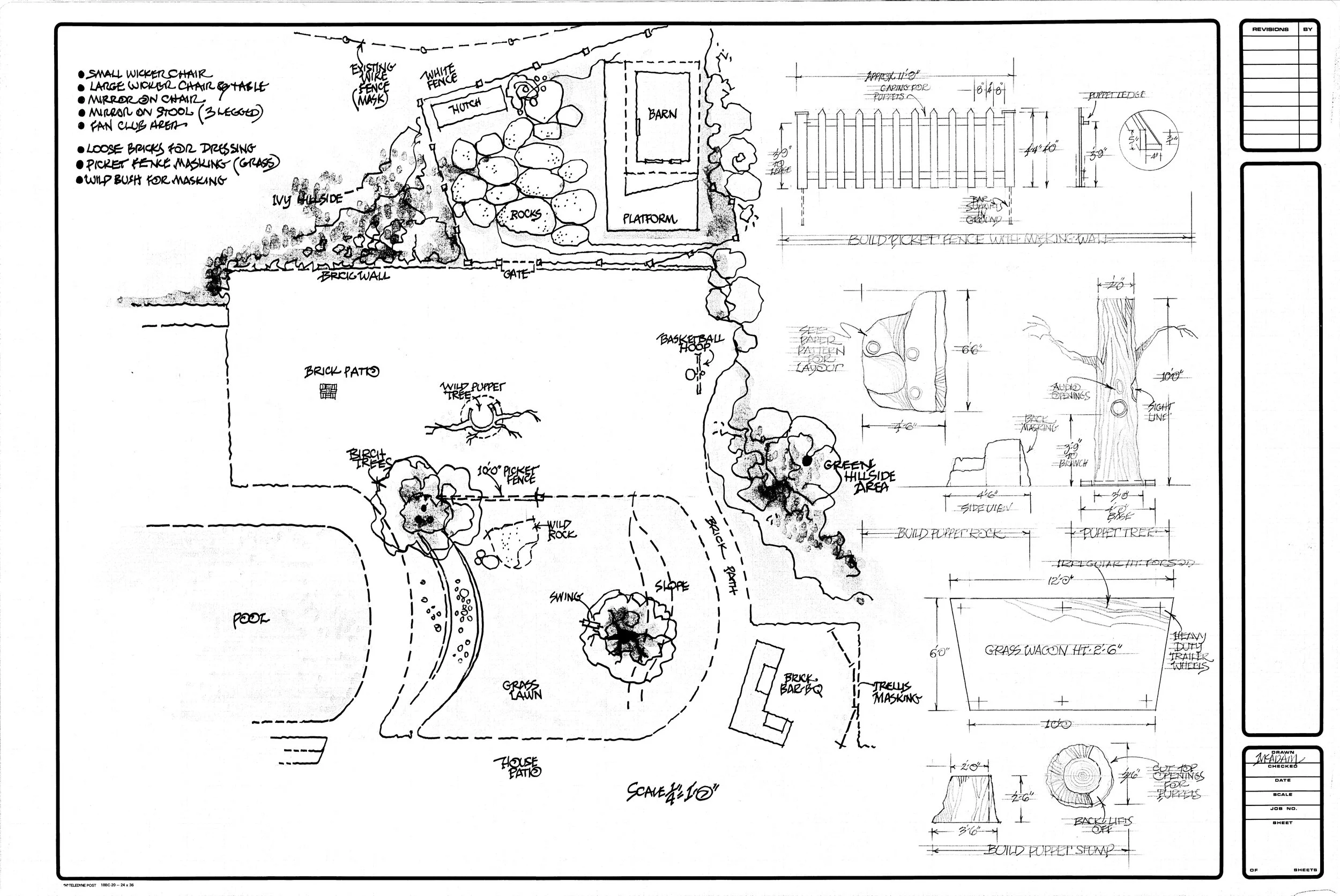
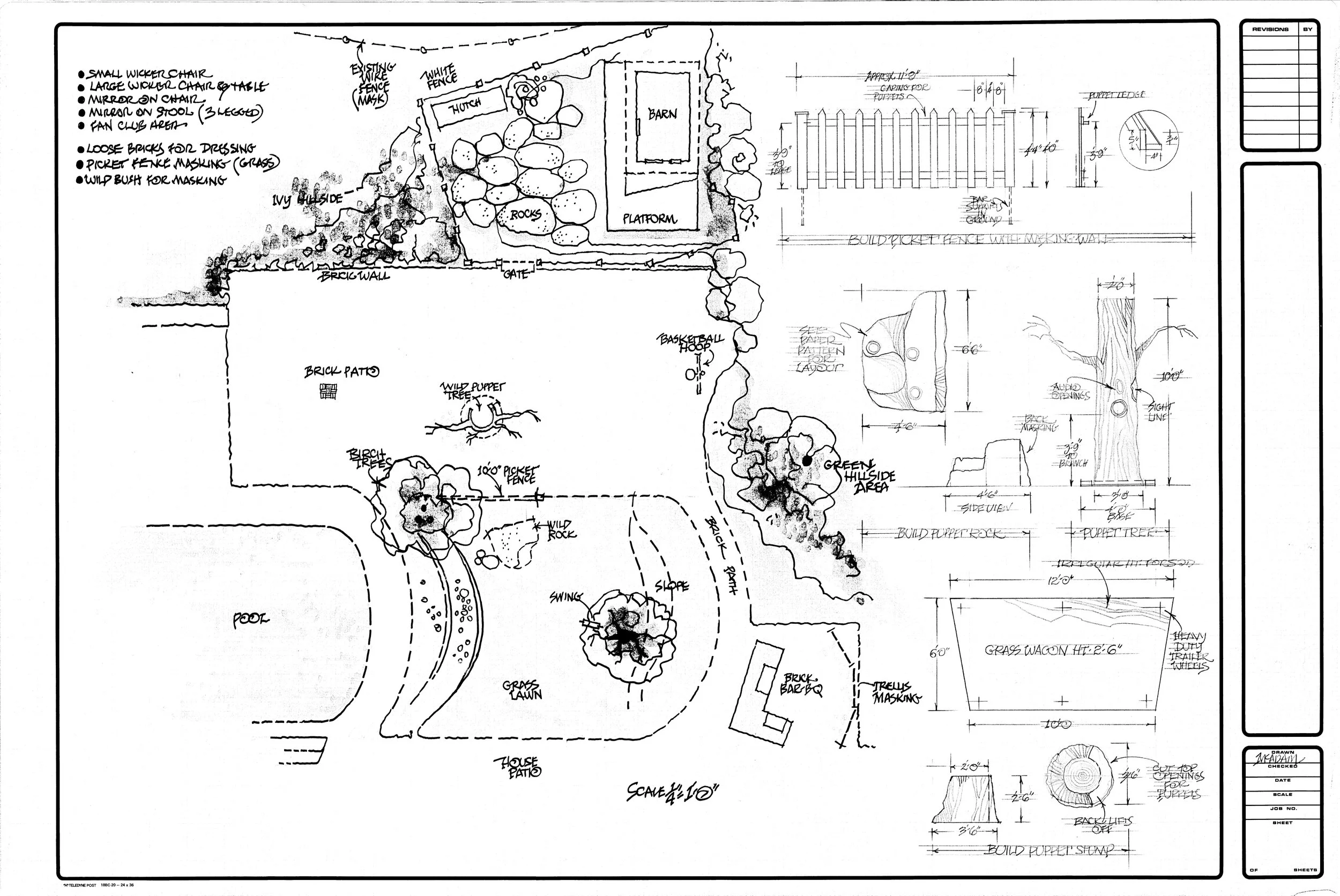
Lamb Chop's Play-Along was a 1992–1997 PBS children's television show starring ventriloquist Shari Lewis and her playful sock puppet Lamb Chop. It rejected passive viewing to actively make kids get up, sing, and move, winning five Daytime Emmy Awards for its high-energy, educational approach.
1991: Lambchop’s Play Along
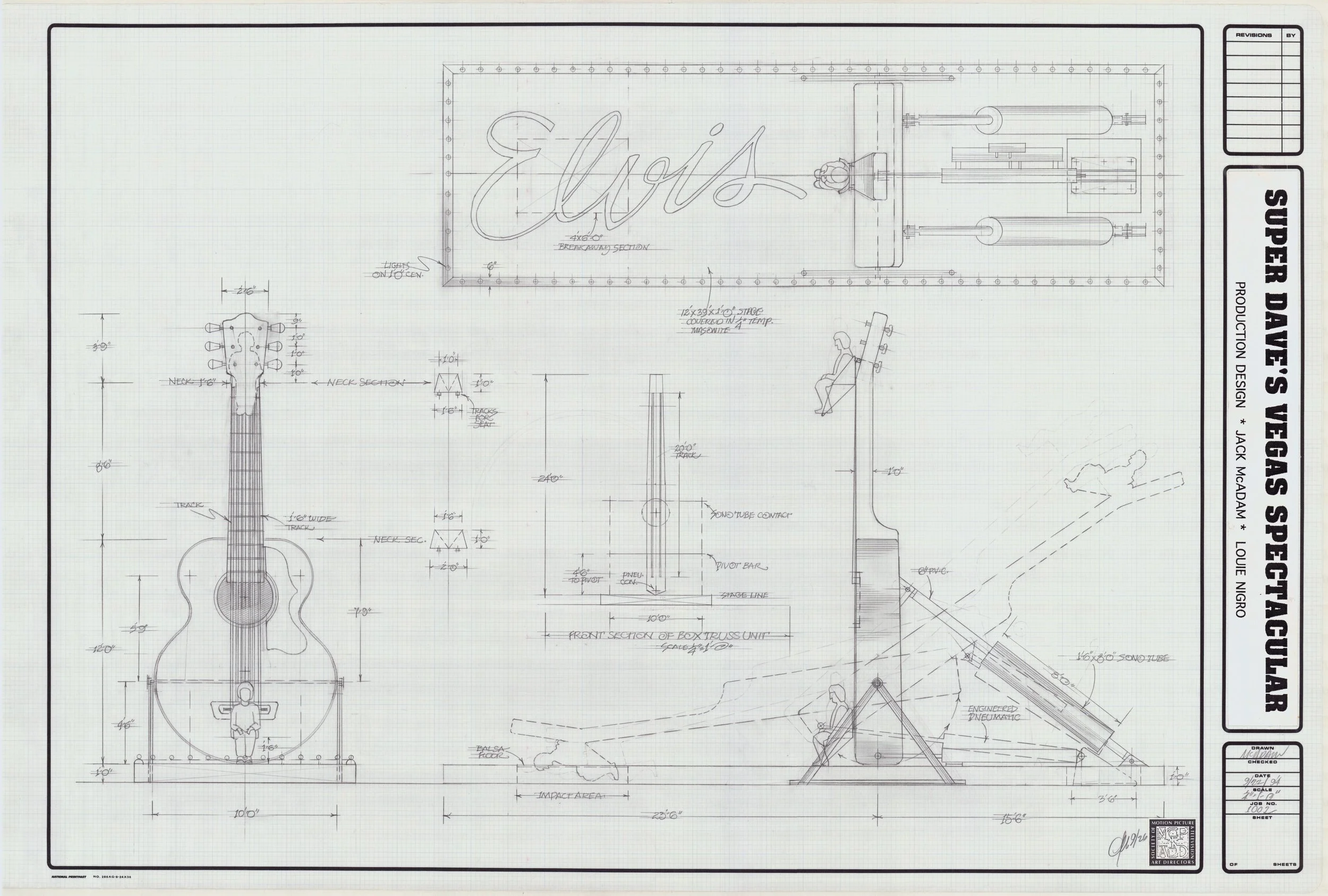
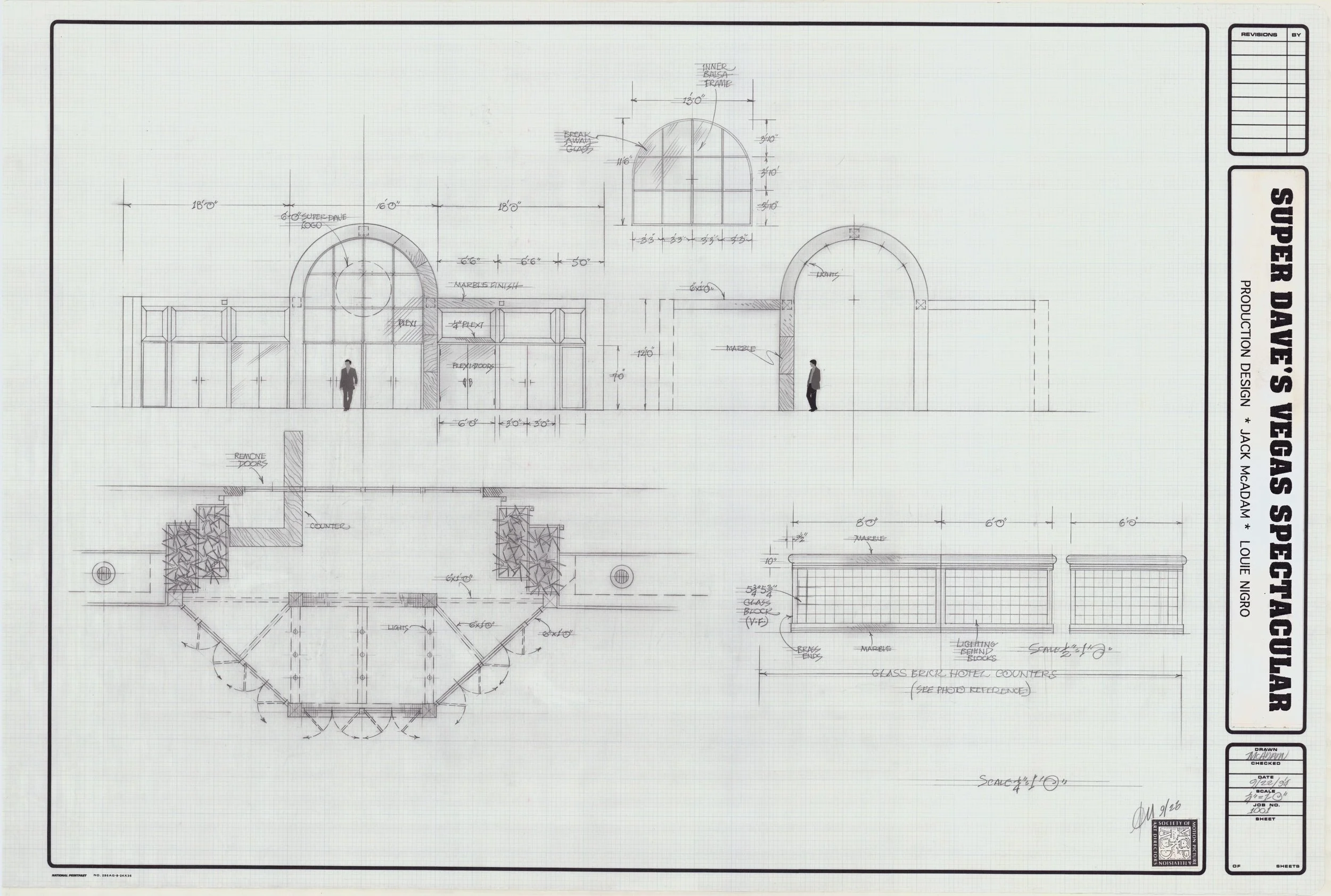
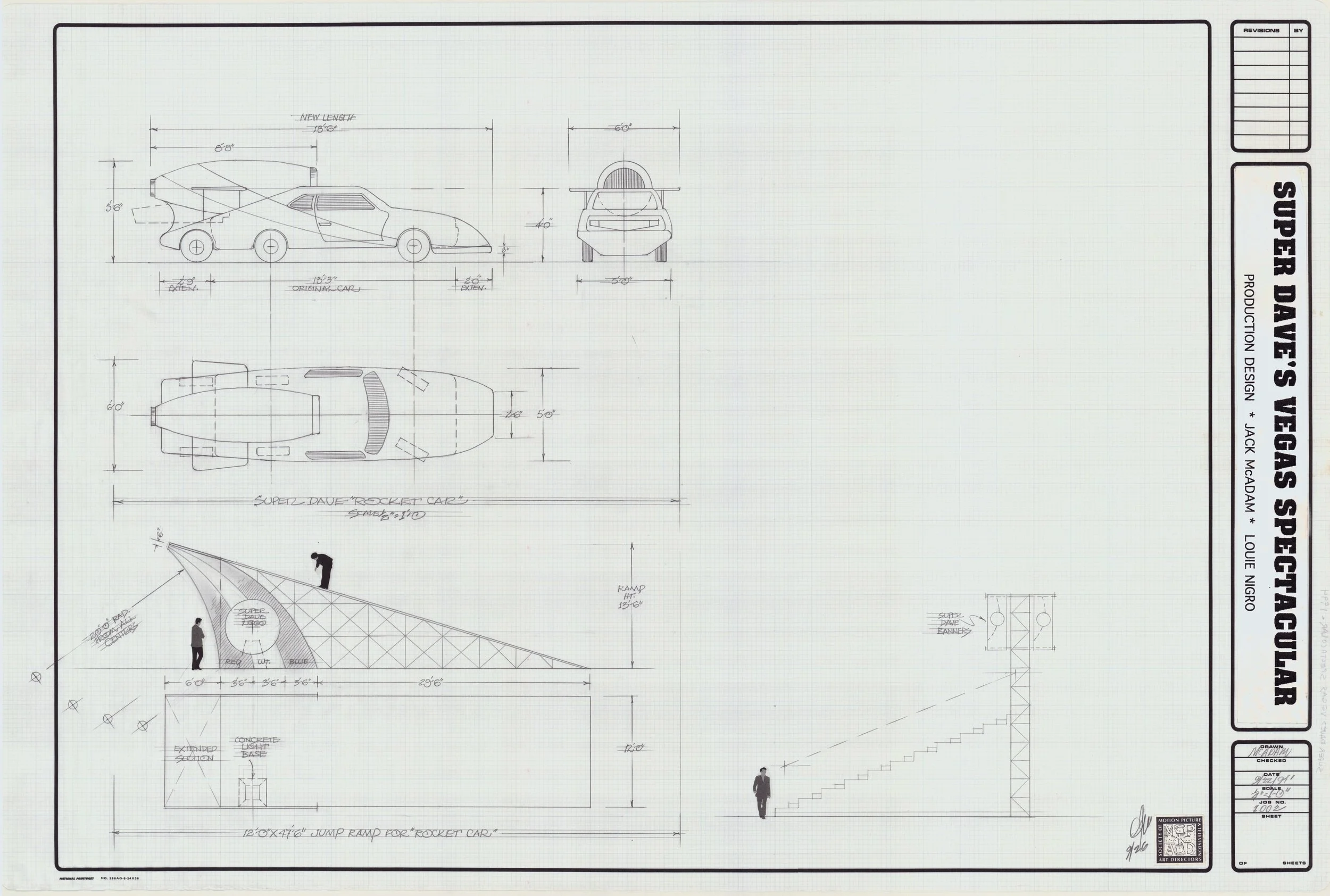
1995: Super Dave’s Vegas Spectacular
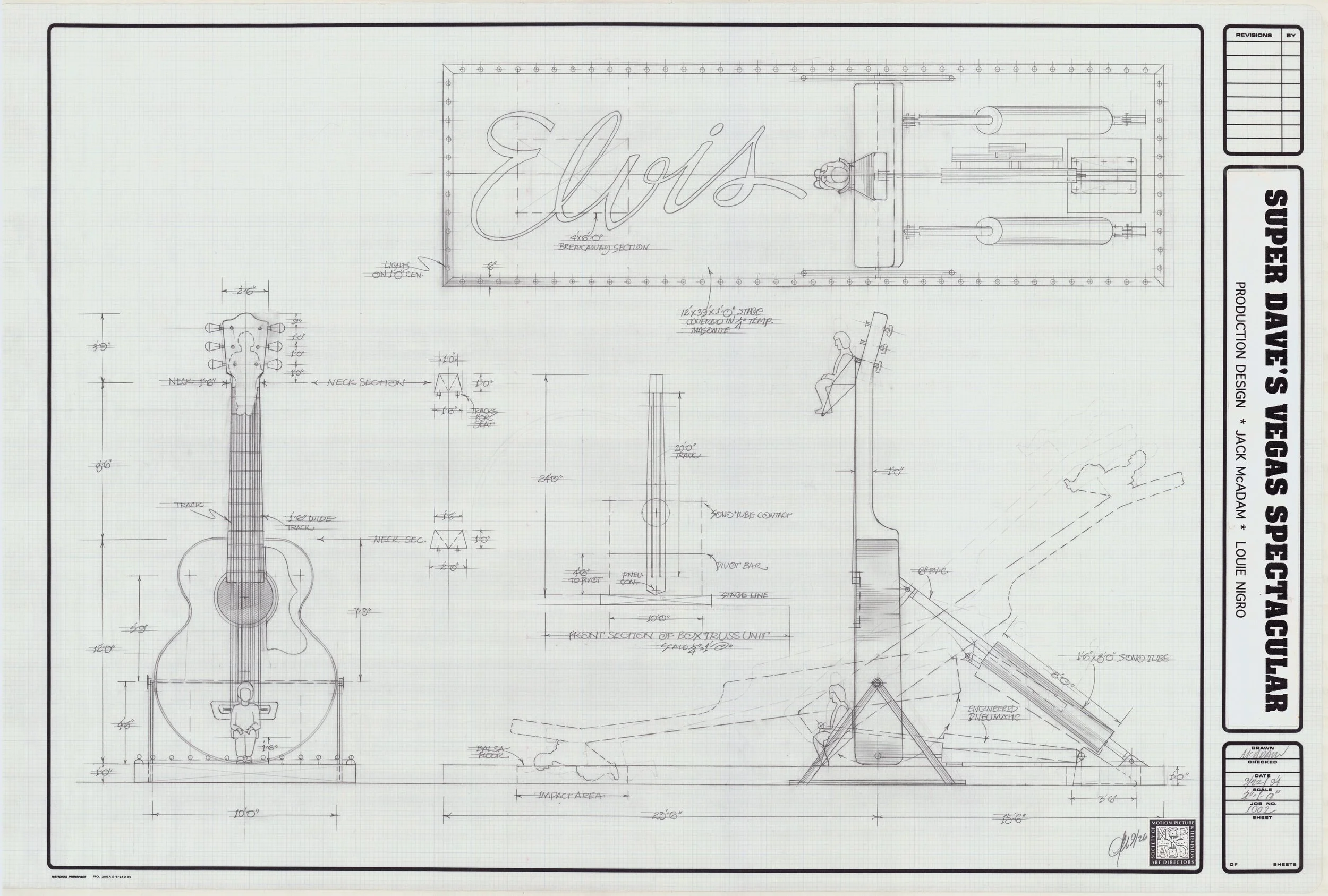
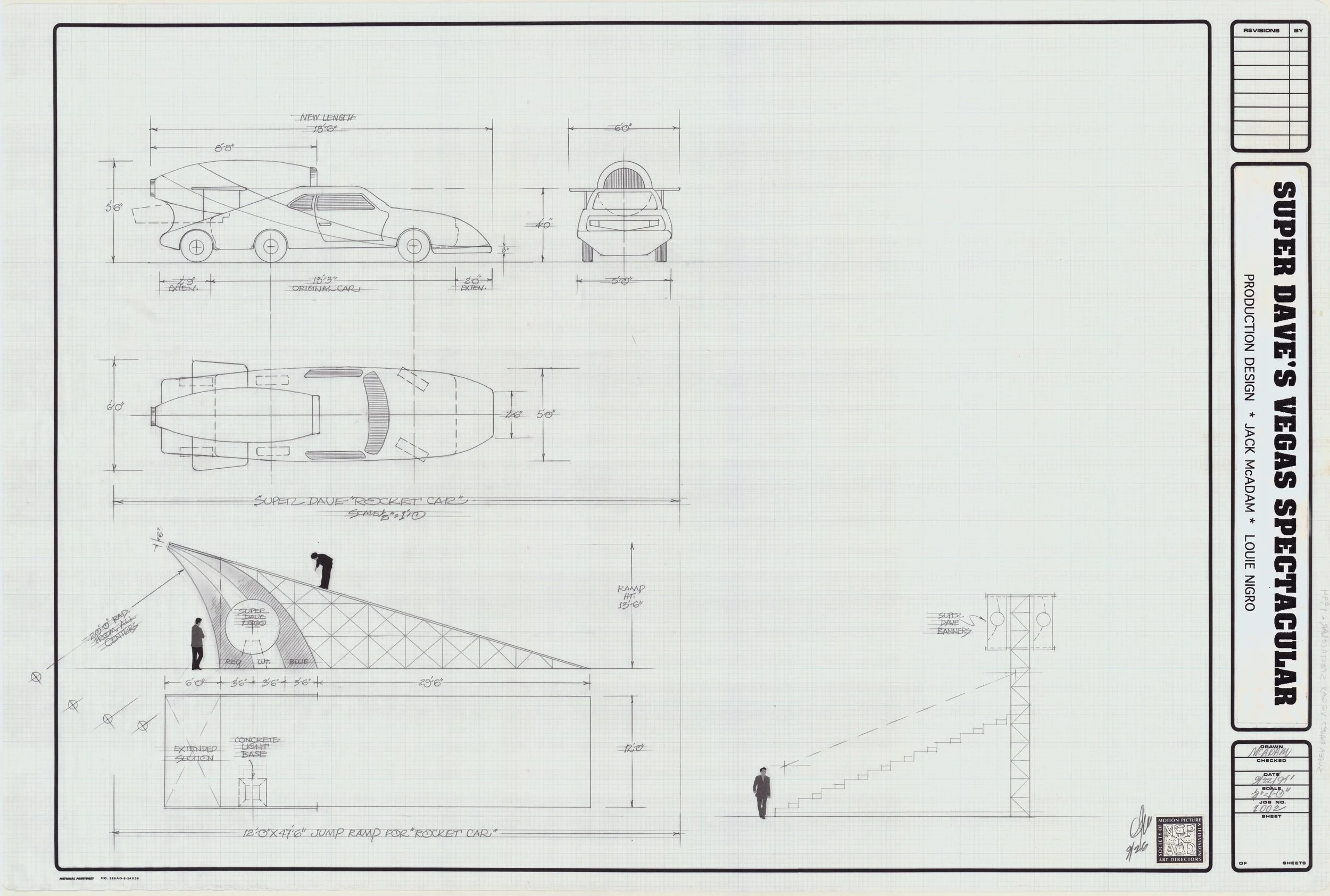
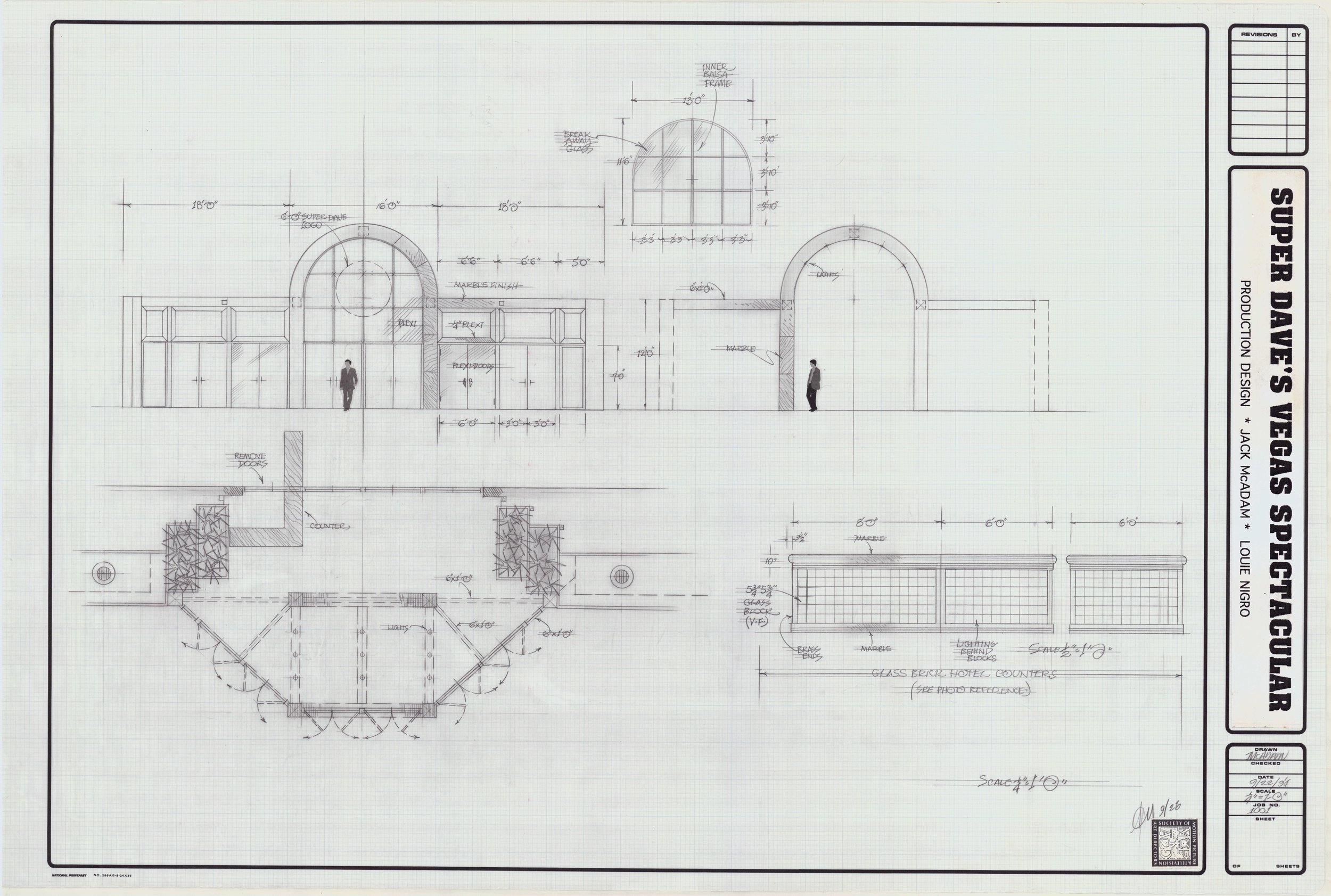
Jack worked on The Super Dave Osborne Show, which aired 95 episodes from the late 1980s into the early 90’s. The blueprints on the left are three of his original hand-drawn designs for the 1995 special.
The Super Dave Osborne Show was a 1980s and 1990s comedy variety program starring comedian Bob Einstein as the clueless, overconfident, and perpetually injured fictional daredevil Super Dave Osborne. It was important because it pioneered a deadpan, multi-layered satire of hyper-masculine stunt culture, media bravado, and commercialized sports entertainment.
Format and Premise
The show ran for 95 episodes across five seasons from 1987 to 1991, airing on Showtime in the U.S. and on the Global Television Network in Canada.
Set inside the fictional "Super Dave Compound," it featured comedy sketches, guest interviews, and musical acts interspersed with Super Dave attempting absurd, death-defying stunts.
Dressed in a red, white, and blue patriotic jumpsuit, Super Dave always boasted supreme confidence and "genuine Saskatchewan sealskin bindings" for safety before things went catastrophically wrong, leaving him flattened, crushed, or launched.
Cultural Importance
Brilliant Satire: It served as a precise parody of overproduced television spectacles and real-life daredevils like Evel Knievel, mocking the arrogant public figures who claim "we've got this under control" right before disaster strikes.
Commitment to the Bit: Bob Einstein never broke character, maintaining an absolute deadpan reality that elevated physical comedy and meta-humor years before modern mockumentaries and absurdist comedy took over television.